
Some books become so popular that their titles escape the page. Even people who have never read 1984 know “Big Brother,” while readers who avoided The Lord of the Rings still recognize Middle-earth. Movie adaptations, classrooms, book clubs and social media have turned the 13 novels below into modern cultural landmarks.
Popularity does not automatically make a book good, and a famous novel is not guaranteed to match your taste. This guide explains why each title became widely known, what kind of reading experience it offers and whether it deserves a place on your list.
13 Popular Books Worth Checking Out
- 1984 by George Orwell
- The Lord of the Rings by J.R.R. Tolkien
- The Kite Runner by Khaled Hosseini
- Harry Potter and the Sorcerer’s Stone by J.K. Rowling
- To Kill a Mockingbird by Harper Lee
- The Da Vinci Code by Dan Brown
- Where the Crawdads Sing by Delia Owens
- The Hunger Games by Suzanne Collins
- The Alchemist by Paulo Coelho
- Life of Pi by Yann Martel
- The Book Thief by Markus Zusak
- The Fault in Our Stars by John Green
- World War Z by Max Brooks
1. 1984 by George Orwell

George Orwell’s dystopian novel follows Winston Smith, a government worker living under constant surveillance in Oceania. The Party controls language, history and even private thought. Winston’s quiet desire for truth becomes an act of rebellion.
The novel remains popular because terms such as Big Brother, thoughtcrime and doublethink give readers a vocabulary for discussing propaganda and state power. Orwell’s style is direct, the ideas are memorable and the ending refuses easy comfort. Read our full 1984 review.
Worth reading? Yes—especially for readers interested in politics, dystopia and the manipulation of truth.
2. The Lord of the Rings by J.R.R. Tolkien

Tolkien’s epic sends Frodo Baggins away from the Shire with the One Ring, an object of terrible power that must be destroyed before Sauron can recover it. The journey expands from a private burden into a war for Middle-earth.
The depth of Tolkien’s languages, history and cultures changed modern fantasy. The pace is slower and the descriptions more detailed than many newer fantasy novels, but the story’s influence is impossible to miss. Read our review of The Lord of the Rings.
Worth reading? Absolutely for fantasy readers willing to take their time with the world-building.
3. The Kite Runner by Khaled Hosseini

Amir and Hassan grow up together in Kabul, but class, ethnicity and a devastating betrayal separate them. Years later, Amir is offered a chance to confront his guilt. Hosseini combines a personal story of friendship with Afghanistan’s political upheaval.
The emotional plot makes the novel accessible, while its setting introduced many international readers to a country too often reduced to war headlines. Content warnings include sexual violence, abuse and war.
Worth reading? Yes, if you are prepared for a painful story about guilt, loyalty and attempted redemption.
4. Harry Potter and the Sorcerer’s Stone by J.K. Rowling

Harry Potter discovers on his eleventh birthday that he is a wizard and has a place at Hogwarts. The first book balances magical discovery, school friendships and a mystery surrounding a guarded object hidden inside the castle.
The accessible prose and inviting school setting helped create one of publishing’s largest franchises. Later installments grow darker, but this opening retains the wonder of entering a hidden world for the first time. Read our complete review.
Worth reading? Yes for middle-grade fantasy, magical-school stories and readers curious about the series’ enormous appeal.
5. To Kill a Mockingbird by Harper Lee

Scout Finch remembers childhood in Depression-era Alabama, where her father Atticus defends Tom Robinson, a Black man falsely accused of assaulting a white woman. The child’s perspective contrasts innocence with the racism shaping the town.
The novel remains a classroom standard, though modern discussions also examine its limitations and the way it centers a white family within a story about racial injustice. Read our book review.
Worth reading? Yes, particularly when paired with historical context and more Black-authored literature about the same era.
6. The Da Vinci Code by Dan Brown

After a murder at the Louvre, symbologist Robert Langdon and cryptologist Sophie Neveu follow a trail of codes tied to art, religion and a secret society. Short chapters and frequent revelations keep the thriller moving.
The historical claims should not be treated as scholarship, but Brown’s puzzle construction explains why the book became a global phenomenon. Read our review of The Da Vinci Code.
Worth reading? Yes for readers who prioritize momentum, codes and conspiracy-driven adventure over literary style.
7. Where the Crawdads Sing by Delia Owens

Kya Clark grows up largely alone in the marshes of North Carolina and becomes the target of suspicion when a local man dies. The novel combines coming-of-age fiction, romance, nature writing and courtroom mystery.
Its atmospheric setting is the strongest element, while the romance and ending divide readers. Read our complete review.
Worth reading? Try it if you enjoy nature-rich historical fiction and character-centered mysteries.
8. The Hunger Games by Suzanne Collins

Katniss Everdeen volunteers to enter a televised fight to the death in place of her younger sister. The Capitol turns violence into entertainment while the districts live under political and economic control.
Collins combines an addictive survival plot with criticism of propaganda, inequality and spectatorship. Read our review of The Hunger Games.
Worth reading? Definitely. It is one of the best entry points into young adult dystopian fiction.
9. The Alchemist by Paulo Coelho

A shepherd named Santiago leaves Spain after dreaming about treasure near the Egyptian pyramids. His journey becomes a parable about purpose, fear and paying attention to signs.
This is one of my all-time favorite books, and I return to it regularly. Its simple philosophy inspires some readers and feels overly tidy to others. Read our positive review of The Alchemist.
Worth reading? Yes. It is short enough to experience for yourself instead of letting its reputation decide for you.
10. Life of Pi by Yann Martel

After a shipwreck, Pi Patel survives on a lifeboat with a Bengal tiger named Richard Parker. The improbable setup becomes a meditation on storytelling, faith and the stories people choose to believe.
The survival material is vivid, but the ending is what transforms the novel into a book-club favorite. Read our full review.
Worth reading? Yes for readers who enjoy survival adventures with philosophical questions.
11. The Book Thief by Markus Zusak
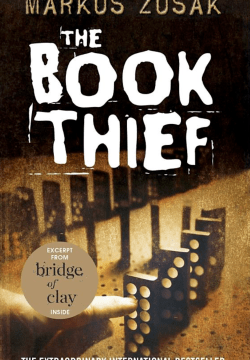
Death narrates the story of Liesel Meminger, a girl living with foster parents in Nazi Germany. She steals books, learns the power of words and forms a bond with the Jewish man hidden in her home.
The unusual narrator and lyrical language distinguish it from more conventional historical novels. The story is emotionally heavy, but its love of books makes it especially meaningful to readers.
Worth reading? Yes for historical-fiction readers comfortable with a stylized narrative voice.
12. The Fault in Our Stars by John Green

Hazel Grace Lancaster meets Augustus Waters in a cancer support group, and their relationship grows around books, humor and the knowledge that time is limited. Green allows the characters to be funny, pretentious and frightened rather than reducing them to their illnesses.
The dialogue can feel polished beyond how teenagers usually speak, but the emotional impact explains the novel’s popularity. Read our review.
Worth reading? Yes for readers seeking an emotional young adult romance.
13. World War Z by Max Brooks

Max Brooks presents a global zombie war through interviews with survivors from different countries and professions. The oral-history format allows the novel to examine politics, military failure, misinformation and survival without relying on a single hero.
The book is very different from its movie adaptation and much more interested in how societies respond to catastrophe. Read our full World War Z review.
Worth reading? Yes for horror and science-fiction readers who enjoy multiple perspectives and large-scale world-building.
Which Popular Book Should You Read First?
- Best classic dystopia: 1984
- Best fantasy epic: The Lord of the Rings
- Best fast-paced thriller: The Da Vinci Code
- Best young adult dystopia: The Hunger Games
- Best emotional historical novel: The Book Thief
- Best philosophical adventure: Life of Pi
- Best unconventional zombie novel: World War Z
- Best short inspirational novel: The Alchemist
Final Thoughts
These novels are popular for different reasons. Some changed their genres, some became classroom standards and others reached millions through movie adaptations. You do not need to love every famous book, but reading the ones that match your interests helps explain why they continue to appear in cultural conversations.
If I had to choose one starting point, I would match the book to your favorite genre rather than selecting the most celebrated title. A fantasy reader should begin with Tolkien, a thriller reader with Dan Brown and a dystopian reader with Orwell or Collins. Popularity may introduce the book; personal taste determines whether it stays with you.
Discover more from Books of Brilliance
Subscribe to get the latest posts sent to your email.

Read Harry Potter, lord of the rings, kite runner, davinci code. Want to read the the fault in our stars by John green