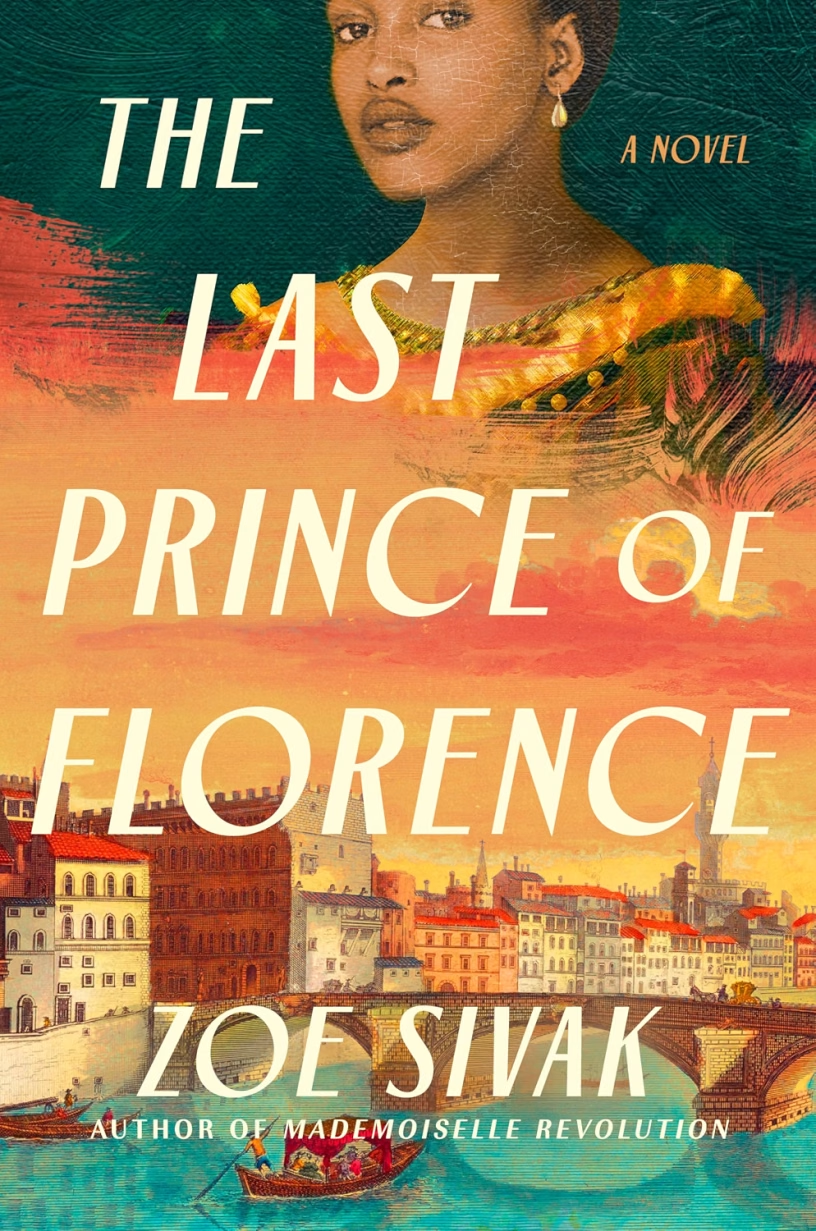
Alessandro de’ Medici became Florence’s first duke in 1532. Zoe Sivak’s novel imagines what it took for his mother, Simonetta, to get him there.
There are two striking portraits of Alessandro de’ Medici. In Giorgio Vasari’s painting, he wears armor. In Jacopo Pontormo’s, he sits in a private room drawing a woman. Both pictures survive. His mother’s life is much harder to piece together. That gap is where Zoe Sivak begins The Last Prince of Florence, a historical novel about a Black woman who schemes to put her son in power. Berkley is set to publish the book in the U.S. on November 17, 2026.
Is The Last Prince of Florence based on a true story? Yes. Alessandro de’ Medici was a real ruler who became the first duke of Florence in 1532. Simonetta is a name historians associate with his mother, whose origins remain uncertain. Sivak imagines her upbringing and gives her a central role in Alessandro’s rise.
How Alessandro de’ Medici became Florence’s first duke
The Medici were driven from Florence in 1527, and a republic took their place. Pope Clement VII, himself a Medici, made an alliance with Holy Roman Emperor Charles V. Imperial troops besieged Florence, which surrendered in 1530. Two years later, new ordinances made Alessandro the first duke, establishing hereditary Medici rule. His marriage to Margaret of Austria, a daughter of Charles V, reinforced the imperial alliance.
That sequence makes the family drama more interesting. The question of who could rule Florence was being settled on several fronts at once, through a siege, a new constitution and a marriage. In Sivak’s premise, Simonetta has to work inside the household whose alliances are reshaping the city.
Who were Alessandro de’ Medici’s parents?
Alessandro was presented as the son of Lorenzo de’ Medici, Duke of Urbino. This Lorenzo was a grandson of Lorenzo the Magnificent. If the accepted account of his paternity is right, Alessandro and Catherine de’ Medici, the future queen of France, shared a father. A rival account named Pope Clement VII as Alessandro’s father. The Met treats Lorenzo’s paternity as a claim and identifies the Clement story as a rumor circulated by detractors.
The evidence about Alessandro’s mother is thinner. The Museo Ferrucciano identifies Simonetta, likely a servant in the household of Lorenzo’s mother, Alfonsina Orsini, as the probable candidate. Historian Catherine Fletcher traces the tradition that Alessandro had an Afro-European mother back to the sixteenth century. Her work also places that tradition in a broader context. People of African origin lived in Renaissance Italy, and forced migration through enslavement was one way they arrived. Simonetta’s ancestry and whether she was enslaved remain uncertain.
What Zoe Sivak imagines about Simonetta
In Berkley’s synopsis, Simonetta starts life as a foundling with a bronze dagger strapped to her chest. An African nurse named Iye raises her. Years later, Simonetta saves Lorenzo’s life in a brawl and uses that opening to enter the Medici household. When she has Alessandro, she discovers how much the family wants a potential heir and how little freedom it’s prepared to give his mother.
The dagger, Iye and Simonetta’s campaign for her son belong to Sivak’s fictional account. The historical sources can tell us who backed Alessandro, when Florence surrendered and who signed on to the new order. They leave room for a novelist to ask what his rise might have meant to the woman who raised him. The sharpest part of Sivak’s premise is that success could pull mother and son further apart. The more power Alessandro gains from the Medici name, the more he has at stake in the family Simonetta has to fight.
Why “last prince” fits a story about Florence’s first duke
Alessandro’s cousin Lorenzino de’ Medici killed him in 1537. Lorenzino presented the murder as the removal of a tyrant, but Florence did not return to republican government. The next duke was seventeen-year-old Cosimo I, who came from a different branch of the Medici family. Alessandro’s death ended the senior branch’s hold on power while opening the way for another Medici to consolidate it. That succession gives Sivak’s title its historical resonance.
The portraits make an especially good companion to the novel’s premise. Vasari’s armored duke shows what authority looked like when Alessandro’s family put it on display. Pontormo gives us the same man absorbed in a drawing. With Simonetta, even the basic details are debated. Sivak makes that imbalance matter by giving the woman we know least about the most consequential choices in the story.
Book details · The Last Prince of Florence by Zoe Sivak · Berkley · U.S. publication scheduled for November 17, 2026 · 464-page paperback · ISBN 9780593549629.
See paperback preorder options on Amazon
Related reading · The 20 Must-Read Historical Fiction Books of All Time
Follow us on Instagram and Facebook
Posts


Discover more from Books of Brilliance
Subscribe to get the latest posts sent to your email.
