
A detective in Kyoto tracks down the recipe for a meal someone hasn’t tasted in years. A Tokyo convenience store worker knows exactly how to handle a shift and puzzles over why everyone wants her to leave. On an unnamed island, a novelist watches familiar objects disappear from the world and from people’s memories.
These seven Japanese novels in English translation offer very different places to start. Pick The Honjin Murders if you like pausing to work out the solution yourself. Try The Kamogawa Food Detectives for a mystery you can read one case at a time. And if you want one book that will make an ordinary workday look a little stranger, start with Convenience Store Woman.
As an Amazon Associate I earn from qualifying purchases.
1. Convenience Store Woman by Sayaka Murata

Translated by Ginny Tapley Takemori. Pick it for sharp, funny social satire.
Keiko Furukura has worked at the same convenience store for eighteen years. The store gives her a script for almost everything, from greeting a customer to stocking a shelf. Her friends and family are more difficult to read. They expect her to get married or find a different job, and their reasons make less sense to Keiko than the rules in the employee manual.
Murata makes Keiko’s competence the funniest part of the book. She knows what she’s doing every minute she’s on shift. Outside the store, people who barely understand her are sure they could run her life better. This is the strongest first pick if you want a compact book with a voice you’ll recognise within a page.
See the English edition of Convenience Store Woman at Grove Atlantic.
2. The Kamogawa Food Detectives by Hisashi Kashiwai

Translated by Jesse Kirkwood. Pick it for a gentle Kyoto mystery.
At a tucked-away Kyoto diner, Koishi Kamogawa and her father, Nagare, take requests from people who want to taste a particular meal again. A customer can remember the person who cooked it or the moment they ate it, yet still have very little idea how it was made. Those gaps are where the investigation begins.
Each case turns on the distance between a recipe and a memory. Even if the detectives can reproduce the meal, the diner can’t give the customer back the day they first ate it. The individual cases make this an easy book to dip into over several evenings.
See the English edition of The Kamogawa Food Detectives on Amazon!.
3. The Honjin Murders by Seishi Yokomizo

Translated by Louise Heal Kawai. Pick it for an Agatha Christie-style locked-room puzzle.
A wedding in a Japanese village in 1937 ends in a double murder. A scream and the sound of a stringed instrument break the night’s quiet. Outside, a bloodied sword stands in the snow. Amateur detective Kosuke Kindaichi has to explain how someone could have committed the crime and left the scene.
Try this one if the most satisfying moment in a detective novel is going back to an early detail and seeing how much it told you. Yokomizo also lets the narrator talk openly about detective fiction, so readers who know the conventions get an extra puzzle: which details are clues, and which are there to send you in the wrong direction?
See the English edition of The Honjin Murders on Amazon!.
4. Strange Weather in Tokyo by Hiromi Kawakami
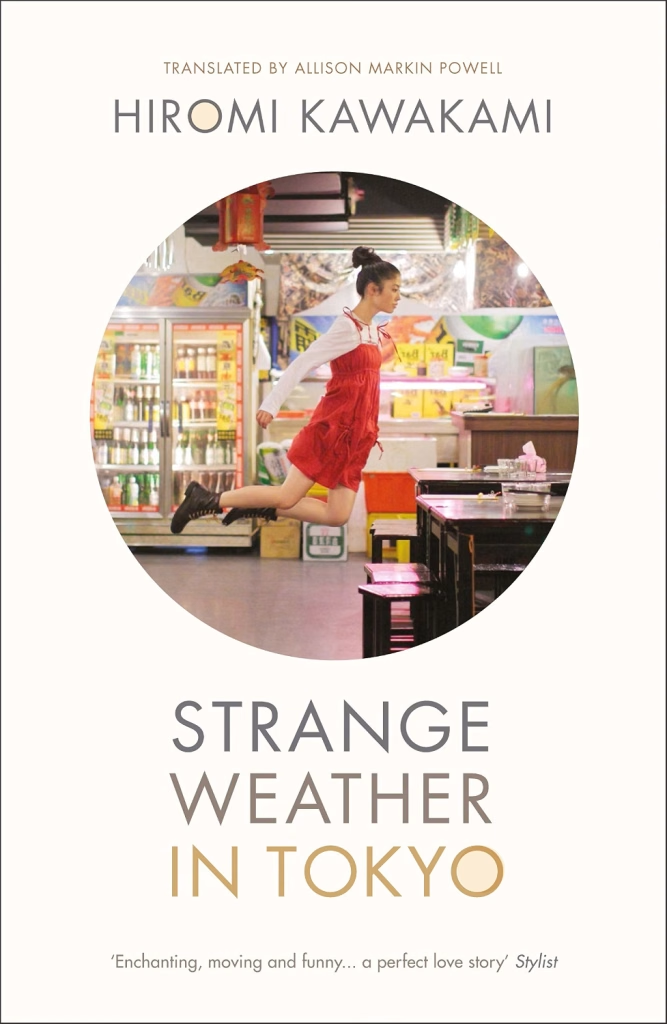
Translated by Allison Markin Powell. Pick it for quiet fiction about loneliness and companionship.
Tsukiko runs into a former high school teacher in a Tokyo bar. She still calls him Sensei. Their bond takes shape through meals, drinks and chance meetings, with stretches of time when neither seems sure what they’re allowed to expect from the other.
The pleasure here is watching two people develop a shared routine before either can say what it means. If your favourite parts of a novel are the conversations over dinner and the pauses between them, this is the one to open first. There’s also an understated romance, and the difference in age gives their growing closeness some friction.
See the English edition of Strange Weather in Tokyo on Amazon.
5. The Woman in the Purple Skirt by Natsuko Imamura
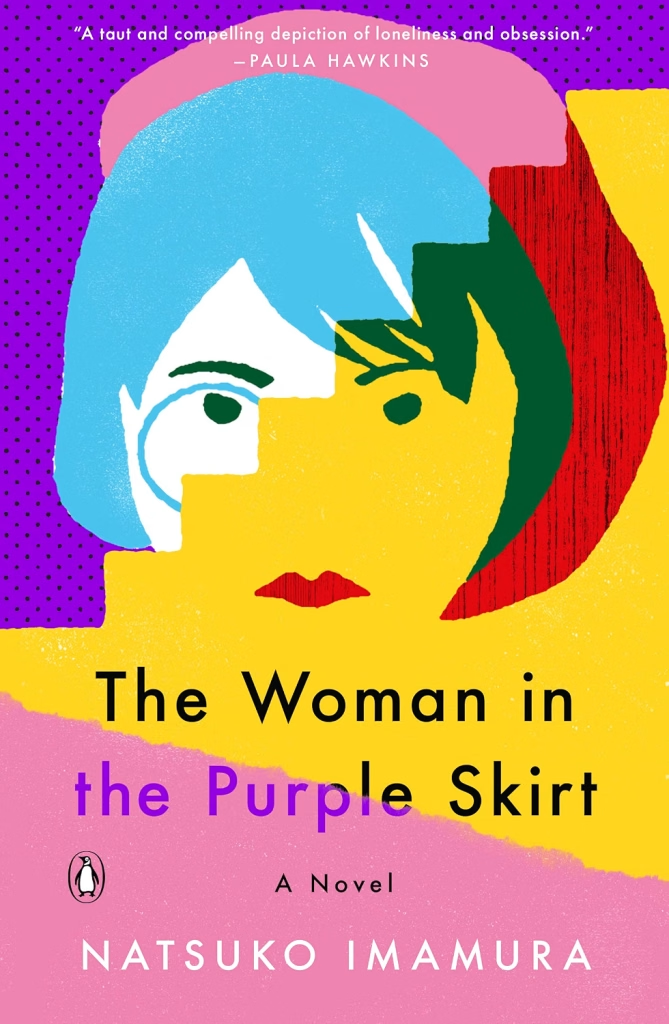
Translated by Lucy North. Pick it for a narrator you can’t quite trust.
An unnamed narrator pays close attention to a woman she identifies by her purple skirt. She knows where the woman sits and what she buys at the bakery. She even helps steer her towards a job at the hotel where she works. The more she tells us about the other woman, the more there is to wonder about her own life.
Imamura gets tension out of ordinary acts. A regular seat on a bench becomes unsettling because somebody else is keeping track of it. This is a good choice if you like stories that make you reconsider how much sympathy to give the person telling them.
See the English edition of The Woman in the Purple Skirt on Amazon.
6. The Memory Police by Yoko Ogawa

Translated by Stephen Snyder. Pick it for a quiet dystopia.
On an unnamed island, things disappear. When they do, most residents lose their attachment to them, while the Memory Police hunt for the people who can still remember. A novelist hides her editor, one of the people who retains those memories.
The unsettling part is how quickly people learn to go about their day after each loss. Ogawa makes that adjustment feel plausible, then asks what a writer can do when the words and objects she needs keep slipping away. Choose this if you liked the slow revelation of Never Let Me Go or want a dystopia that stays close to its characters’ daily lives.
See the English edition of The Memory Police on Amazon.
7. The Travelling Cat Chronicles by Hiro Arikawa

Translated by Philip Gabriel. Pick it for a road trip with a sharp-tongued cat.
Satoru takes his cat, Nana, on a trip to visit old friends. Nana has plenty of opinions about the people and places along the way. The visits also reveal different parts of Satoru’s life, giving the reader a reason to pay attention to the stops as well as the destination.
Nana’s dry voice gives the story room to be funny even as the reason for the trip becomes clearer. Pick this when you want a book about friendship and home that makes room for grief. It’s the one I’d suggest to a reader who wants something tender and can handle a sadder story.
See the English edition of The Travelling Cat Chronicles on Amazon.
If you’re torn between the two mysteries, ask whether you want a solution you can try to beat the detective to or a story about why the answer matters to someone. Choose The Honjin Murders for the first and The Kamogawa Food Detectivesfor the second. For a longer browse, see our Japanese books reading list.
Follow us on Instagram and Facebook


Discover more from Books of Brilliance
Subscribe to get the latest posts sent to your email.
