
The scene in Interstellar that’s hardest to shake is the one where Cooper sits down to watch years of messages from his children. The movie turns a lesson in relativity into something anyone can understand: he’s only been gone a few hours by his own clock, and his kids have grown up without him. The Martian gets a different kind of suspense out of science. Every time Mark Watney solves a problem, he gets to stay alive long enough to discover the next one.
If you’re looking for science fiction books like Interstellar or The Martian, start with the part of the movie you’d want more of. Joe Haldeman’s The Forever War makes coming home the hardest part of space travel. Andy Weir’s Project Hail Mary gives you another life-or-death problem to solve alongside the person doing the math. And if the 1976 film Logan’s Run is the one you’re revisiting, its source novel has an even harsher countdown.
As an Amazon Associate I earn from qualifying purchases.
| If you want more of… | Start with |
|---|---|
| The years Cooper can never get back | The Forever War |
| A ship racing against the physics of space travel | Tau Zero |
| The pleasure of watching someone solve an impossible problem | Project Hail Mary |
| More time inside Mark Watney’s head | The Martian |
| The wonder of finding out who’s out there | Contact |
| A mystery that can unfold over millions of years | House of Suns |
| The chase and social rules of a ’70s dystopia | Logan’s Run |
1. The Forever War by Joe Haldeman
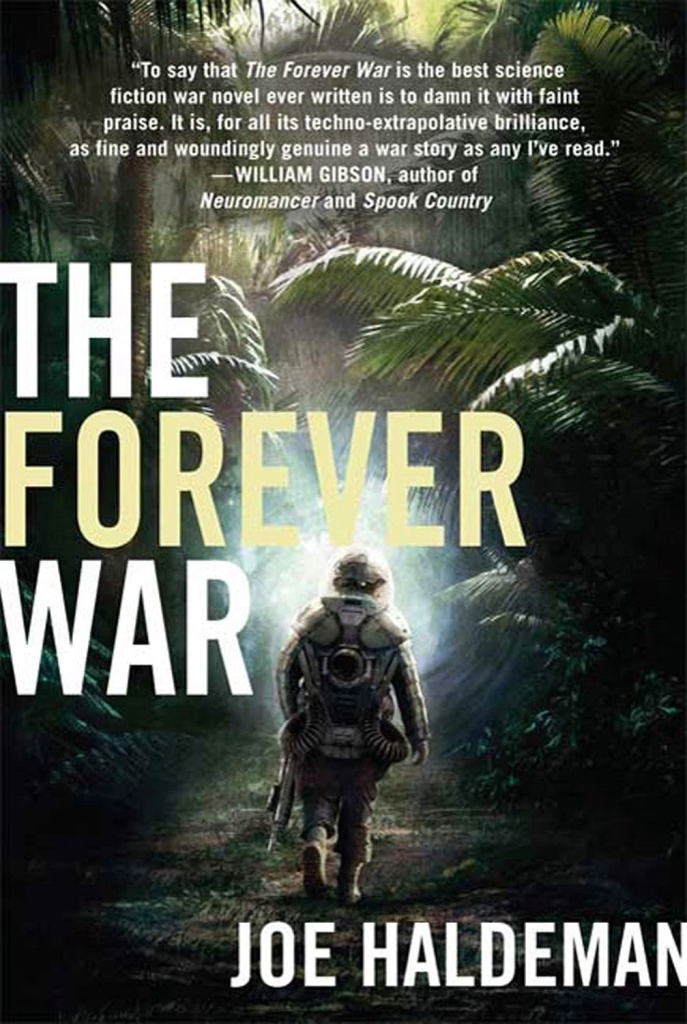
William Mandella is sent to fight a war far from Earth. Because of time dilation during his journeys, decades can pass back home while comparatively little time passes for him. Over the course of the war, familiar places and social customs recede into history. Staying alive is only half the challenge. Mandella also has to find a place in a society that keeps moving on without him.
This is the closest match if you keep thinking about the messages Cooper watches in Interstellar. Haldeman takes that feeling and makes it recur. Each return is another reckoning with how much of a life a person can miss while doing the job they’ve been sent to do.
Find The Forever War on Amazon (paperback)
2. Tau Zero by Poul Anderson
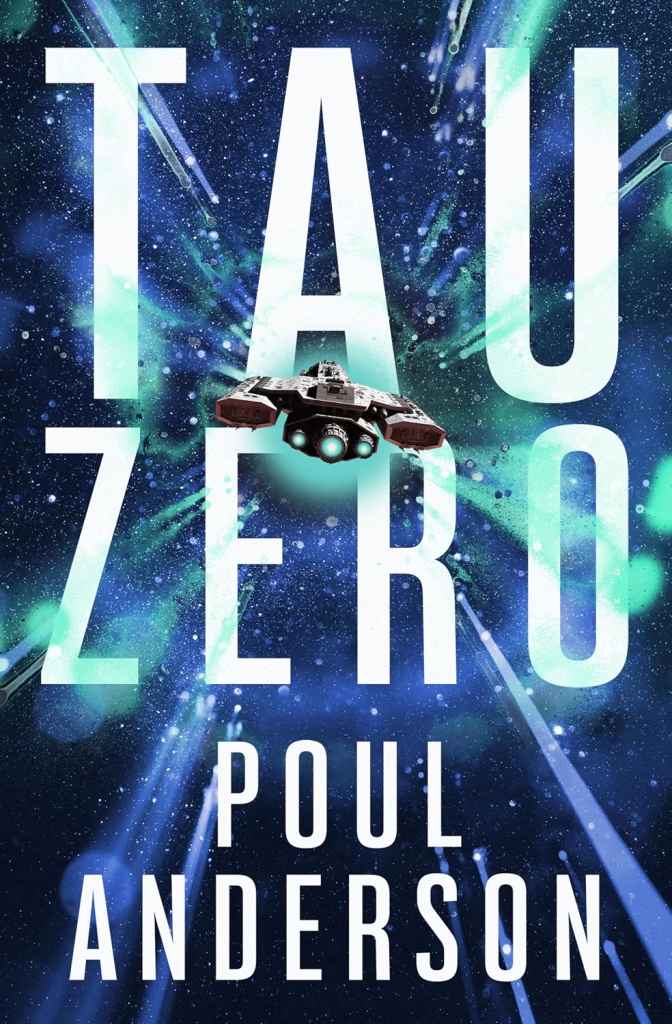
The crew of the Leonora Christine sets out to reach another star system. Then an encounter with a nebula leaves the ship unable to slow down as planned. As it accelerates closer to the speed of light, the gulf between the crew’s experience of time and what’s happening outside the ship grows.
Pick Tau Zero if you spent the drive home from Interstellar talking about how its clocks worked. Anderson makes the ship’s inability to brake the engine of a whole novel. It’s a more technical read than Weir’s books, and its most unnerving question is what happens to a crew’s sense of purpose when the destination that united them is already behind them. Open Road Media edition
3. Project Hail Mary by Andy Weir

Ryland Grace wakes up aboard a spacecraft with two dead crewmates and no memory of why he’s there. He has to reconstruct his mission while trying to finish it. The setup brings together the best reasons to read Weir after watching either film: the practical problem-solving of The Martian and an assignment with the stakes of Interstellar.
It’s also the easiest book here to recommend to someone who rarely reads science fiction. Grace thinks out loud, which makes even the technical scenes feel like an invitation to guess what he’ll try next. Go in knowing as little about the mission as you can.
Find Project Hail Mary on Amazon
4. The Martian by Andy Weir

If you’ve only seen the movie, the novel gives you more of the running calculations that make Watney’s survival so addictive. He has to keep track of how much food he has, which equipment he can salvage, and how far he can travel before he runs out of power. His logs turn every estimate into a small cliffhanger. You can see what he’s betting on and what will happen if he’s wrong.
The novel also spends more time on Watney’s long drive across Mars, including complications the film cuts. It’s a good pick if the movie made you wish you could follow more of his experiments from the first bad idea to the workable solution.
5. Contact by Carl Sagan

Radio astronomer Ellie Arroway has spent years listening for a signal that could establish the existence of extraterrestrial intelligence. When a signal arrives from the direction of Vega, the discovery raises another set of problems: how to interpret it, who speaks for Earth, and what evidence the public will accept.
Start here if what you wanted from Interstellar was more time with the scientists before the launch. Sagan gives the work of listening, verifying, and persuading its own suspense. There’s also a satisfying reason to read the novel if you already know the Jodie Foster film. Sagan gives the journey a multinational crew, changing who gets to experience what happens and who can speak to it afterward.
6. House of Suns by Alastair Reynolds
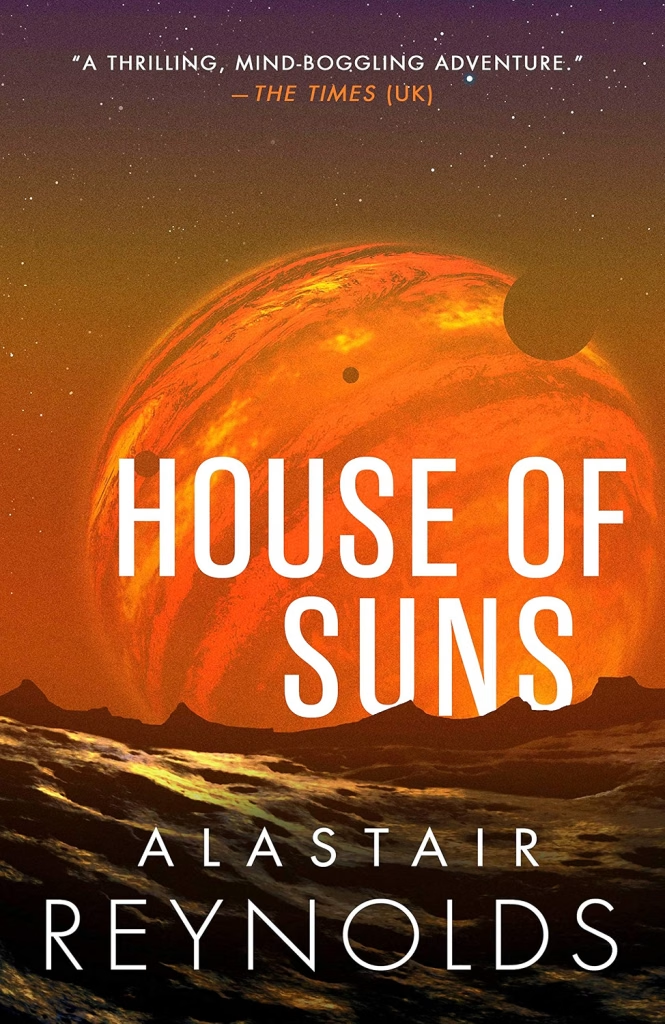
Campion and Purslane belong to a family of clones who spend vast stretches of time traveling independently through the galaxy. When they arrive late to a reunion, they find that someone is targeting their family. They have to piece together a mystery whose history runs far deeper than any one journey.
Where Interstellar makes a few lost decades hurt, House of Suns asks what relationships, memories, and secrets could survive across millions of years. The family reunion is what makes that enormous scale work. Before you’ve got a handle on the galaxy’s history, you already know what it means for two people to come home and find almost everyone gone.
Find House of Suns on Amazon (paperback)
7. Logan’s Run by William F. Nolan and George Clayton Johnson
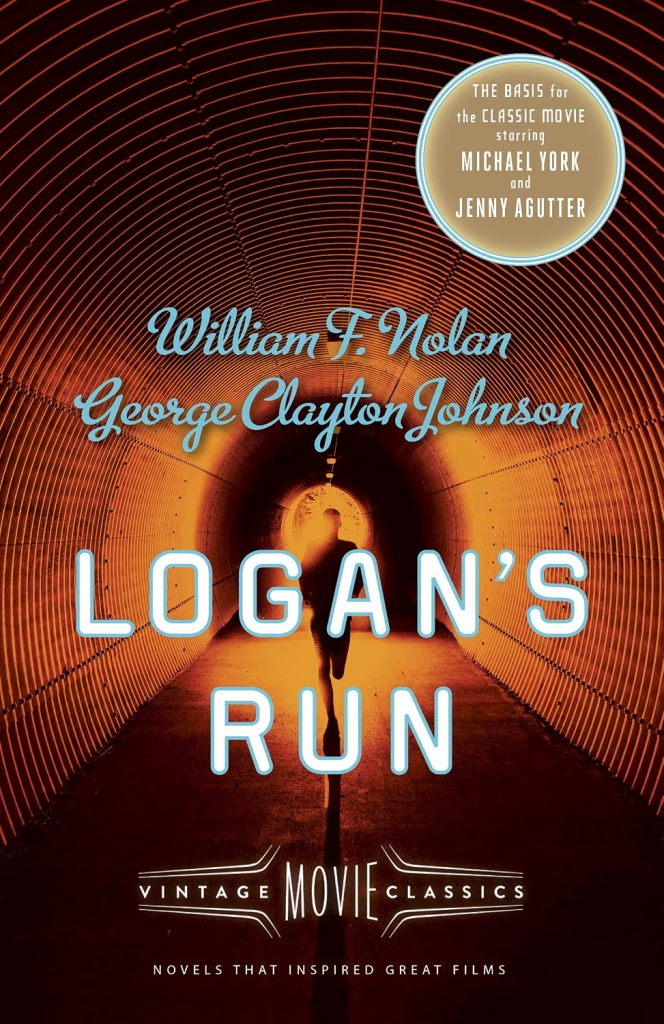
The 1967 novel behind the 1976 movie sets the legal limit on life at 21. The film raises it to 30 and stages Lastday as the public spectacle of Carousel. In the book, citizens who try to escape their Lastday are hunted by Sandmen. Logan is one of the people trained to stop them, until he becomes a runner himself.
Read this one if you want the pace of a ’70s thriller. The chase raises a question the film’s spectacle can almost drown out. What does a society have to teach children about aging and obligation for them to accept that 21 is a full life?
Which science fiction book should you read first?
If you’re choosing one book after Interstellar, make it The Forever War. It’ll give you that same uneasy feeling of watching Earth age from a distance, then ask what it would take to build a life there again. After The Martian, pick Project Hail Mary for another novel that lets you work the problem alongside the main character. If you’d rather start with a short, tense dystopia, go with Logan’s Run.
For more recommendations, explore the best science fiction books of the past decade or more books to read after Project Hail Mary.
Follow us on Instagram and Facebook


Discover more from Books of Brilliance
Subscribe to get the latest posts sent to your email.
