
Finding food and shelter can keep a character alive. The more interesting question is what makes that life worth continuing.
These seven post-apocalyptic novels explore the answers through theater, parenthood, faith, work, grief, and the difficult business of building a community. They still have danger and desperate journeys, but their most memorable conflicts involve what people preserve—and what they should leave behind.
For a first pick, choose Station Eleven for art and memory, Severance for sharp social satire, or Parable of the Sower for the struggle to imagine a different society while the old one falls apart.
This is a thematic reading list, rather than a ranking. It includes stories set during an unfolding collapse as well as novels that follow its aftermath. No major ending spoilers follow.
Affiliate disclosure: This article contains affiliate links. If you buy through these links, Books of Brilliance may earn a commission. As an Amazon Associate I earn from qualifying purchases.
Choose your next book
| If you want a novel about… | Start with | What to expect |
|---|---|---|
| Art and the things people remember | Station Eleven by Emily St. John Mandel | An interwoven story of performance, loss, and connection |
| Grief and the possibility of companionship | The Dog Stars by Peter Heller | Lyrical writing alongside sudden violence |
| Community and a new system of belief | Parable of the Sower by Octavia E. Butler | An unsettling journey through a society in collapse |
| Work, habit, and immigrant identity | Severance by Ling Ma | Deadpan humor and an eerie pandemic narrative |
| Knowledge and humanity’s repeated mistakes | A Canticle for Leibowitz by Walter M. Miller Jr. | Philosophical science fiction across centuries |
| What later generations inherit | Earth Abides by George R. Stewart | A patient study of social and ecological change |
| Parenthood and moral responsibility | The Road by Cormac McCarthy | A spare, emotionally intense journey |
1. Station Eleven by Emily St. John Mandel

Read it for: the argument that art belongs among life’s necessities.
After a flu pandemic destroys much of civilization, the Traveling Symphony moves between settlements performing music and Shakespeare. Mandel also takes readers back into the world before the catastrophe, tracing connections among people who could not have known what those connections would eventually mean.
That movement between past and present gives ordinary objects an unusual weight. A comic, a remembered performance, or an artifact of everyday technology can hold a piece of someone’s former life. Preserving these things becomes a way of refusing to let the vanished world disappear completely.
The novel earns its place here because performance is a practical act of community. People gather, recognize a story, and briefly share something beyond fear. Mandel makes room for the possibility that culture helps a society exist in the first place.
Choose this one if you enjoy linked lives and gradual revelations more than a straightforward journey from danger to safety. Our Station Eleven review explores why the novel stays with readers.
Bring this one to your reading pile: Get Station Eleven in paperback on Amazon.
2. The Dog Stars by Peter Heller

Read it for: the cost of protecting yourself from every possible loss.
Hig survives a devastating pandemic and lives at a small Colorado airport with his dog, Jasper, and his wary neighbor Bangley. Flying offers him a measure of freedom, while a mysterious radio transmission raises the possibility of a life beyond the perimeter they defend.
Heller gives the landscape and Hig’s grief equal importance. Memories of his wife, the companionship of his dog, and the beauty of the natural world all complicate the idea that security should be his only goal.
The tension comes from a recognizable emotional problem: reaching other people means accepting the risk of being hurt again. A carefully guarded existence might keep Hig alive while leaving him unable to recover much of a life.
Choose The Dog Stars if you want an intimate voice and attention to nature. Expect tenderness, but also violence and painful loss; the lyrical passages do not make this a gentle book.
Purchase prompt: Make room for Peter Heller’s The Dog Stars if grief and the search for connection are what draw you to the genre.
3. Parable of the Sower by Octavia E. Butler

Read it for: a survivor who wants to build a future, not simply reach one.
Lauren Olamina grows up in a walled California community as climate pressures, poverty, and violence erode the society around it. When she must leave, her journey becomes a test of whom to trust and how people might organize themselves differently. [3]
This is a collapse unfolding unevenly. Some people still have shelter and resources while others are already living through catastrophe. That makes Butler’s novel especially useful for readers interested in how social arrangements determine who gets to feel safe.
Lauren’s developing belief system, Earthseed, gives her ambitions a scale beyond the next meal. Her ideas invite questions about leadership: when does conviction help people cooperate, and what responsibilities come with asking others to follow?
Choose this one if you want a book that puts ideas under pressure through difficult choices. It contains severe violence, including sexual violence, and it offers little distance from suffering. Readers who want to continue Lauren’s story can follow it with Parable of the Talents.
Purchase prompt: Pick up Parable of the Sower for Butler’s demanding exploration of belief and community.
4. Severance by Ling Ma

Read it for: the unsettling possibility that the end of the world might initially resemble another workday.
Candace Chen works in New York publishing production as Shen Fever spreads. Even while the city empties, she remains attached to familiar routines. Later, a group of survivors offers companionship under a leader whose authority becomes another problem to navigate.
Ma finds horror in repetition. Work habits that once provided structure become increasingly strange when the systems supporting them have stopped making sense. The novel asks how much of an identity can be built around activities a person barely remembers choosing.
Candace’s relationship with her Chinese immigrant parents also gives the story an emotional history larger than the outbreak. Displacement and longing existed before the pandemic; the catastrophe changes their setting without making them disappear.
Choose Severance if you want dry humor, uncomfortable recognition, and a survivor whose inner life matters as much as the mechanics of escape. The humor is sharp enough to make the familiar world look peculiar well before it collapses.
For your next read: Find Ling Ma’s Severance in paperback on Amazon.
5. A Canticle for Leibowitz by Walter M. Miller Jr.
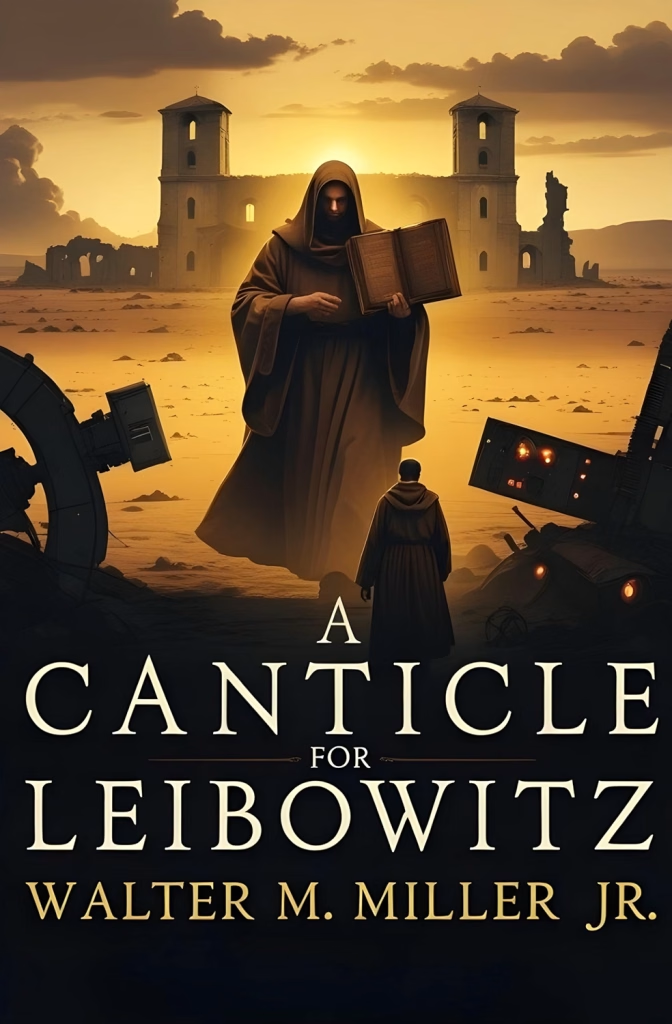
Read it for: the difference between saving knowledge and learning how to use it wisely.
In the aftermath of nuclear devastation, a religious order preserves fragments of the old world’s knowledge. Across centuries, those remnants become part of humanity’s attempt to understand and rebuild what was lost.
Miller’s long perspective changes the scale of the genre. Individual survival matters, but so does the fate of information that might outlast its custodians. A document can endure while its meaning becomes uncertain, leaving later generations to interpret what earlier ones took for granted.
The book’s darker question concerns progress. Recovering technical ability does not automatically give people better judgment. A civilization can become more capable while remaining vulnerable to familiar ambitions and mistakes.
Choose this one if you enjoy history, religious questions, and satire in your science fiction. Its shifts across time reward readers willing to watch institutions and ideas develop beyond a single character’s lifetime.
Explore the classic: Get the mass market paperback of A Canticle for Leibowitz on Amazon.
6. Earth Abides by George R. Stewart
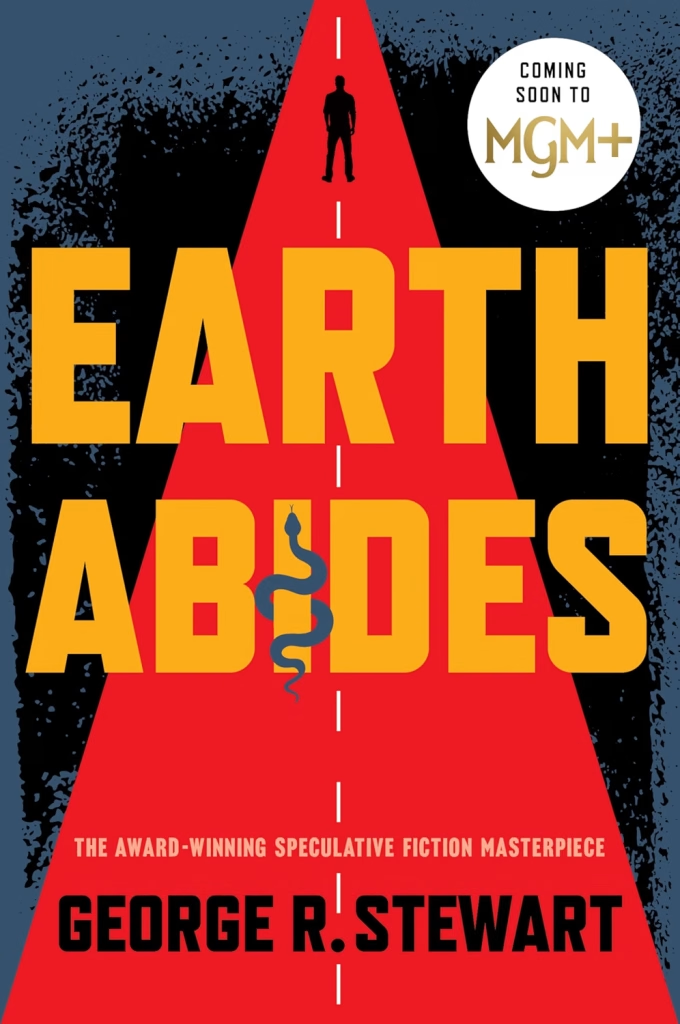
Read it for: the gap between the world adults remember and the world their children actually inhabit.
After a plague kills most of humanity, Isherwood Williams discovers that the civilization he knew has vanished. A small community eventually forms, and the novel follows the changes that come with time and new generations.
Stewart is interested in the systems people normally inherit without much thought. Literacy, infrastructure, and shared knowledge depend on more than the continued existence of books and buildings. They require people who can teach, maintain, and find uses for them.
That creates a difficult question for the survivors: should rebuilding mean restoring the old society, or adapting to the world that now exists? Ish’s memories give him knowledge, but they also shape expectations that younger people may not share.
Choose Earth Abides for its broad view of ecological and social change. Its older social assumptions warrant a critical reading, especially around race, gender, and who is treated as capable of shaping the future.
Add it to your classics shelf: Find Earth Abides in paperback on Amazon.
7. The Road by Cormac McCarthy

Read it for: the struggle to pass on a moral life when almost everything that supported it has disappeared.
A father and son travel through a burned, devastated America toward the coast. Food is scarce, strangers can be dangerous, and the cause of the catastrophe remains unexplained.
The father’s overriding purpose is to protect his child. The boy’s concern for other people makes that purpose more complicated. Their encounters repeatedly raise the question of what protection permits—and what it might cost a person to become capable of anything in the name of safety.
That tension gives the novel its force. Parenthood becomes a form of cultural inheritance: the father is trying to keep a child alive while teaching him what kind of person to be. Those duties do not always point toward the same decision.
Choose The Road if you can tolerate extreme bleakness and want a short novel with considerable emotional weight. Its scenes of cruelty are disturbing. For a closer spoiler-light assessment, read our The Road review.
Read McCarthy’s novel: Get The Road in paperback on Amazon.
Which one should you read first?
Station Eleven is the strongest starting point for readers who want the list’s central question made tangible: what do people keep doing when survival no longer explains every choice? Its performers offer one answer simply by continuing to make art.
If you want a more confrontational book, choose Parable of the Sower. If you want the apocalypse to expose the strangeness of ordinary life, choose Severance. For a book club, pair Station Eleven with A Canticle for Leibowitz and ask what deserves to be preserved—and who gets to decide.
Which matters most to you in a post-apocalyptic novel: rebuilding a community, preserving the past, or imagining a different future?
Follow us on Instagram and Facebook


Discover more from Books of Brilliance
Subscribe to get the latest posts sent to your email.
