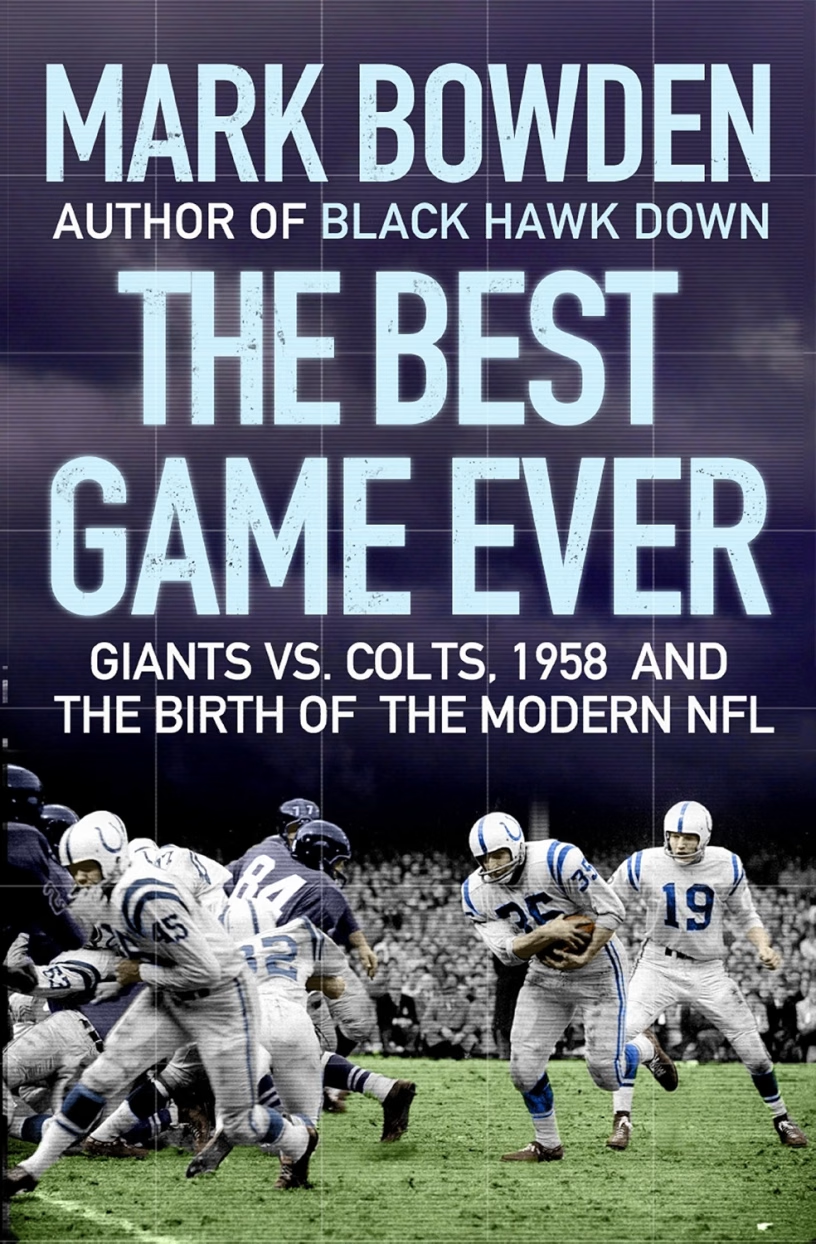
The Giants were seven seconds away from an NFL title when Baltimore kicker Steve Myhra sent the 1958 championship game to overtime. New York got the ball first, ran three plays and punted. The Giants never got it back. By the time Alan Ameche scored from a yard out, the Baltimore Colts had won 23–17 at Yankee Stadium, and a national television audience had seen the NFL’s first championship game decided in sudden death.
Mark Bowden tells that story in The Best Game Ever: Giants vs. Colts, 1958, and the Birth of the Modern NFL. The part that draws me in is the gap between what Giants fans lost and what the rest of the country got to see. A season ended on one short run. For the NFL, those extra minutes gave viewers across the country a reason to pay attention to a league that was already growing.
How the Giants lost the 1958 NFL Championship
New York took a 17–14 lead in the fourth quarter when Charlie Conerly found Frank Gifford for a 15-yard touchdown. Baltimore’s late drive began at its own 14. Johnny Unitas missed his first two throws, then found Lenny Moore for a first down. Three completions to Raymond Berry carried Baltimore to the Giants’ 13, setting up Myhra’s 20-yard field goal.
The Giants won the overtime coin toss, but their offense went three-and-out. Baltimore drove 80 yards in 13 plays before Ameche crossed the goal line. From New York’s side, the punt is the moment I’d linger on. After spending the end of regulation watching the Colts erase their lead, the Giants had the first chance to win in overtime. Once they punted, their offense could only watch.
Why this game became such a big deal
The name “Greatest Game Ever Played” makes the game sound cleaner than it was. The teams lost six fumbles between them, and Gifford himself thought the standard of play fell well short of the game’s reputation. That makes the nickname more interesting. A national audience watched a close championship go past the end of regulation, with the next score deciding the title. Professional football and television were both expanding in the 1950s, and this game gave people around the country a shared reason to follow the sport.
One detail from Bowden’s opening captures how different football on TV was. The league’s blackout rules kept local stations from showing the championship in New York, so some viewers there tuned in to a faint signal from Philadelphia. The game could reach the president in Gettysburg more reliably than some fans in the city where it was played.
What Mark Bowden’s book adds
Bowden follows the people who made the game, including Unitas and Berry for Baltimore and Gifford and linebacker Sam Huff for New York. The Giants’ sideline had two future head coaches who would help shape the league, Vince Lombardi and Tom Landry. Bowden’s reporting draws on interviews and Berry’s own game notes, which give readers a chance to see what went into the late drives from the perspective of someone who had to run the routes.
I’d point Giants fans toward the book for what it gives New York beyond the final score. If you’ve only seen the clip of Ameche scoring, it’s easy to remember the Giants as the defenders he ran through. The book gives you a chance to spend time with the team that had the lead, and with the people on both sidelines whose careers make this game worth revisiting.
The Grove paperback is available to look up by ISBN 9780802144126. You can also read Bowden’s opening chapter on the publisher’s site. Read an excerpt from The Best Game Ever
For another team-history reading list, see our guide to hockey books about the Toronto Maple Leafs.
Follow us on Instagram and Facebook


Discover more from Books of Brilliance
Subscribe to get the latest posts sent to your email.
