
If you’re looking for books like The Name of the Rose, start with C. J. Sansom’s Dissolution. It has a murder inside a monastery, an investigator who has to question his own loyalties, and a religious institution with good reason to keep its secrets. For a book that makes you work as hard as Umberto Eco does, try Iain Pears’s An Instance of the Fingerpost. And if you still think about the library, read The Shadow of the Wind.
I rated The Name of the Rose 4.5 stars. What stayed with me was how often the murder investigation turned on a question about reading. Is a clue meaningful because someone left it for you, because it fits your theory, or because you can show what it actually proves? The books below offer different versions of that pleasure. Some take you back to a religious house. Others give you an old book to decipher or a witness whose account changes on a second reading.
As an Amazon Associate I earn from qualifying purchases.
Which book should you read next?
| What you liked about Eco’s novel | Read next | Why it fits |
|---|---|---|
| A monastery murder entangled with church politics | Dissolution | The investigator answers to the authority dismantling the monasteries. |
| A medieval monk who pays attention to people | A Morbid Taste for Bones | A fight over a saint’s relics gives Brother Cadfael his first case. |
| A theory you have to revise as you read | An Instance of the Fingerpost | Four witnesses make the same murder look like four different cases. |
| A library worth getting lost in | The Shadow of the Wind | One surviving book leads to an author whose work someone wants erased. |
| A mystery that turns on how you interpret a text | The Dante Club | Translating Dante gives a group of scholars a way to read a series of crimes. |
1. Dissolution by C. J. Sansom

Best for — The closest overall match
In 1537, Thomas Cromwell sends lawyer Matthew Shardlake to a Sussex monastery after a royal commissioner is murdered. The Crown is dismantling England’s monasteries, so the people Shardlake questions have good reason to worry about what a truthful answer might cost them.
Sansom makes the investigator part of the machinery he’s investigating. Shardlake supports reform, yet the case tests what he believes about the people carrying it out. If you liked how a murder in Eco’s abbey could never stay separate from church politics, start here.
Start with the first Shardlake mystery on Amazon
2. A Morbid Taste for Bones by Ellis Peters

Best for — A medieval monk with a different way of reading people
Brother Cadfael accompanies a delegation from Shrewsbury Abbey to Wales to retrieve the remains of Saint Winifred. The villagers disagree over whether the relics should leave. A death turns a dispute over religious prestige into a murder investigation.
Cadfael is a warmer presence than William of Baskerville, and the first book in his series has a gentler pace. What links the two is how carefully each detective distinguishes a sincere belief from the ambitions of someone who claims to speak for it.
Meet Brother Cadfael in his first case on Amazon
3. An Instance of the Fingerpost by Iain Pears

Best for — The strongest match for Eco’s intellectual challenge
An Oxford scholar is murdered in 1663. Four narrators recount the case, and each version changes how you understand the testimony you’ve already read. Restoration politics, religion, and experimental science all shape what the witnesses can see and what they’re willing to admit.
Pears makes rereading part of the pleasure. A detail that seemed to confirm one account takes on a new meaning in another. Pick this if your favorite part of Eco’s novel was watching an elegant explanation start to buckle under awkward evidence.
Try the four-narrator Oxford mystery on Amazon
4. The Dante Club by Matthew Pearl

Best for — A murder mystery solved through close reading
In 1865 Boston, a group of literary figures working to bring Dante to American readers sees a connection between a series of murders and the punishments in the Inferno. Their scholarly work gives them a way into a case that would otherwise look like a string of unrelated horrors.
With Eco, the danger lies partly in who gets access to a text. Pearl asks what happens when an old text becomes a script someone can follow. The translation work matters because understanding the pattern requires more than spotting a familiar allusion.
Follow the clues from Boston to Dante’s Inferno on Amazon
5. The Shadow of the Wind by Carlos Ruiz Zafón

by Carlos Ruiz Zafón
Best for — A secret library and the books someone wants erased
In postwar Barcelona, Daniel Sempere chooses a novel from the Cemetery of Forgotten Books. His curiosity about its author, Julián Carax, draws him toward a disturbing discovery. Someone has been destroying copies of Carax’s work.
The library in Eco’s novel makes knowledge difficult to reach. Zafón’s library gives threatened stories somewhere to survive. That difference makes this a particularly satisfying follow-up if the abbey’s books stayed with you longer than the identity of the killer. Expect a Gothic family mystery and a more openly emotional story.
Explore the Cemetery of Forgotten Books on Amazon
6. The Rule of Four by Ian Caldwell and Dustin Thomason
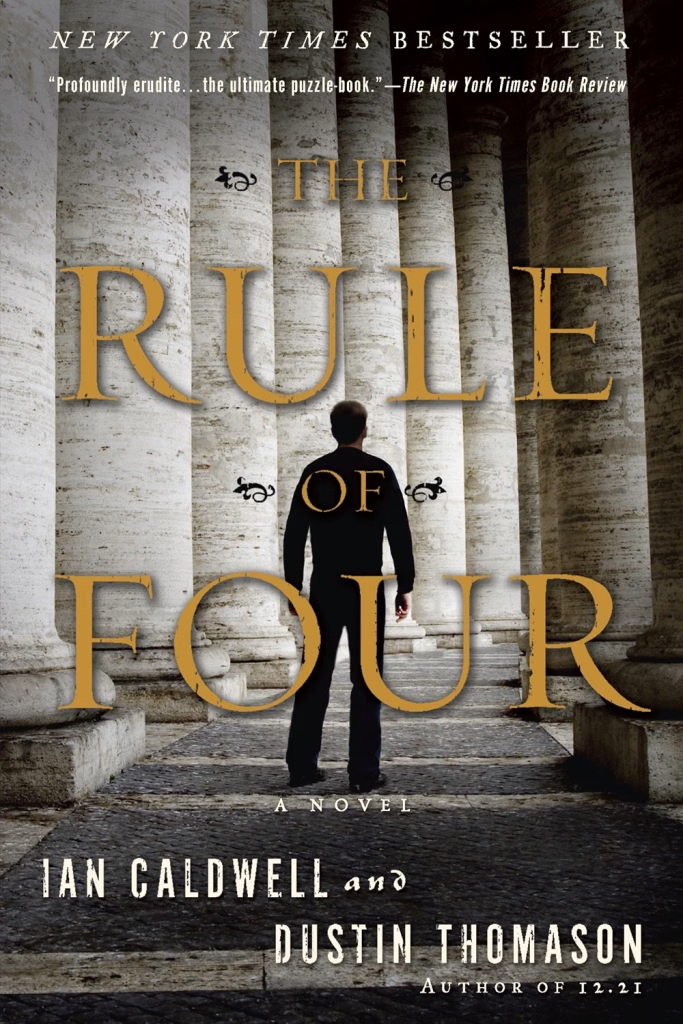
Best for — A real Renaissance book at the center of a campus thriller
Princeton students try to decipher the Hypnerotomachia Poliphili, a real book printed in 1499. Their work turns dangerous as the search for the text’s secrets becomes entangled with murder. The authors build their fictional solution around a book that has puzzled real scholars.
This is the pick for readers who wanted more time with the manuscript itself. The campus friendships also give the story a question that runs alongside the code. How much of your life are you willing to hand over to a problem that may never yield an answer?
Try the Princeton mystery built around a Renaissance text on Amazon
7. The Seventh Function of Language by Laurent Binet, translated by Sam Taylor

Best for — A murder investigation that takes literary theory literally
Binet starts with the real death of French critic Roland Barthes in 1980 and turns it into a fictional investigation. A detective and a scholar look for a possible secret function of language, one that would make the ability to persuade worth killing for. Umberto Eco even appears as a character.
Where Eco takes medieval arguments seriously enough to build suspense around them, Binet finds comedy in giving intellectual rivalries the stakes of a conspiracy thriller. Choose it for the argument about what words can do and for the pleasure of watching theorists try to outmaneuver each other.
Read the literary whodunit that casts Eco as a character on Amazon
8. The Daughter of Time by Josephine Tey

Best for — A historical cold case solved from a hospital bed
Scotland Yard inspector Alan Grant, recovering in hospital, reopens the centuries-old question of whether Richard III murdered the Princes in the Tower. His case files are portraits, books, and historical accounts. Each brings its own problem of provenance and bias.
Grant’s initial hunch comes from a portrait, an especially shaky piece of evidence. The book gets more interesting as he asks who recorded a claim, when they recorded it, and what they stood to gain. Read it for the detective work of tracing an accusation back to its source.
Reopen the Princes in the Tower case with Alan Grant on Amazon
9. The Alienist by Caleb Carr

Best for — A period investigation shaped by new ideas about crime
In 1896 New York, psychologist Laszlo Kreizler and reporter John Schuyler Moore help investigate a series of killings. They look for patterns in the crimes and use them to infer what sort of person might be responsible.
William’s habits of observation can feel startlingly modern in an abbey. Kreizler’s methods have a similar effect in Carr’s New York, where the team has to persuade others that studying behavior can yield evidence. This is a darker, more graphic choice, with a citywide investigation and an emphasis on criminal psychology.
Follow Kreizler’s first investigation in 1890s New York on Amazon
10. The Devil and the Dark Water by Stuart Turton

Best for — A locked-room puzzle with an apparent supernatural culprit
In 1634, detective Samuel Pipps is being transported to Amsterdam as a prisoner. When strange events aboard the ship make passengers suspect a demon, his companion Arent Hayes takes on much of the investigation.
A ship offers the same kind of pressure as a secluded abbey. Witnesses are stuck with one another, rumors travel faster than evidence, and every new incident can look like proof of the story people already believe. Turton puts more weight on the mechanics of the puzzle, which makes this a good choice if you want to test your own theory as you go.
Board Turton’s shipbound mystery on Amazon
11. The Skull Mantra by Eliot Pattison

Best for — A case that tests the limits of political and religious authority
A Tibetan prison work crew finds a headless body. Shan Tao Yun, an experienced Chinese investigator who is himself a prisoner, is given the case. The arrest of a Buddhist priest adds urgency to a search already constrained by the authorities overseeing it.
The period and setting are far removed from Eco’s. The kinship is in the cost of following evidence when the institution in charge has the power to decide whose account counts. Shan’s vulnerability gives even routine questions a sense of danger.
Start with Shan Tao Yun’s first case on Amazon
12. The Oxford Murders by Guillermo Martínez
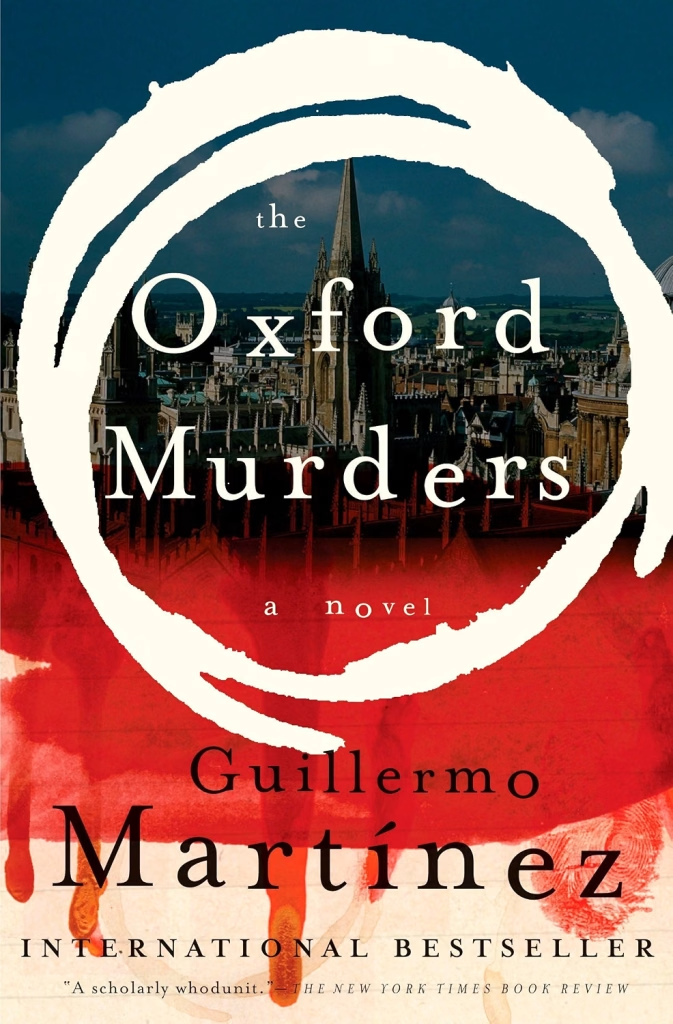
Best for — A short, modern mystery about the danger of a good theory
After a woman is found dead in Oxford, a mathematics student and an established logician try to make sense of symbols that appear to connect the killing to a sequence of crimes. Each new clue seems to narrow the possibilities, provided they’ve understood what the symbols are for.
A sequence can fit more than one rule. That simple idea makes this a natural follow-up to Eco, whose detective also has to reckon with the gap between recognizing a pattern and proving it means something. Pick it when you want the logic of the investigation in the foreground.
Test your theory against the clues in Oxford on Amazon
Where to start if you want just one book
Pick Dissolution for the strongest blend of historical atmosphere, murder, and institutional secrets. Pick An Instance of the Fingerpost if you’d happily trade the abbey for four accounts of the same crime and a reason to doubt each one. If the loss of books is the part of Eco’s novel that stayed with you, The Shadow of the Wind is the one I’d put in your hands.
For more period settings and investigations, browse our best historical mystery books. If you’ve finished Eco’s novel, our The Name of the Rose ending explained looks at what the library fire means for William’s investigation and the books he came to find.
Follow us on Instagram and Facebook


Discover more from Books of Brilliance
Subscribe to get the latest posts sent to your email.
