
Start Joe Abercrombie’s First Law books with The Blade Itself, then follow publication order. Read the original trilogy, continue with Best Served Cold, The Heroes and Red Country, and then move on to the Age of Madness trilogy. The short-story collection Sharp Ends fits between Red Country and A Little Hatred.
That route preserves the series’ surprises while letting you watch its world change. Characters who seem peripheral in one book can become crucial in another, and the consequences of a war or political decision rarely stay contained within a single novel.
The confusing part is the labeling: “The First Law” can mean the original three-book trilogy or the wider fictional universe. This guide separates the two, explains which books are optional, and keeps major spoilers out of the discussion.
Disclosure: As an Amazon Associate, I earn from qualifying purchases made through affiliate links in this article.
The First Law Books in Order at a Glance
The recommended reading order follows publication order. The nine novels form the main sequence; the two fiction collections below are supplementary.
| Reading position | Book | First published | Where it fits |
|---|---|---|---|
| 1 | The Blade Itself | 2006 | Original trilogy, Book 1 |
| 2 | Before They Are Hanged | 2007 | Original trilogy, Book 2 |
| 3 | Last Argument of Kings | 2008 | Original trilogy, Book 3 |
| 4 | Best Served Cold | 2009 | Standalone novel in the same world |
| 5 | The Heroes | 2011 | Standalone novel in the same world |
| 6 | Red Country | 2012 | Standalone novel in the same world |
| Optional here | Sharp Ends | 2016 | Short-story collection |
| 7 | A Little Hatred | 2019 | Age of Madness, Book 1 |
| 8 | The Trouble with Peace | 2020 | Age of Madness, Book 2 |
| 9 | The Wisdom of Crowds | 2021 | Age of Madness, Book 3 |
| Optional afterward | The Great Change (and Other Lies) | 2023 | Additional short fiction connected to the Age of Madness |
The standalone novels are sometimes grouped under the name The Great Leveller. They have individual central plots, but they also connect the two trilogies. For a first read, keep them in the order shown above.
Where Should You Start With Joe Abercrombie?
For the First Law universe, begin with The Blade Itself. It introduces the people, rivalries and institutions that make the later books more rewarding.
It also establishes the series’ particular appeal. Abercrombie pairs violence and political manipulation with sharp humor, then lets characters expose the gap between how they describe themselves and how they actually behave. If you are new to that style, our guide to what grimdark fantasy means explains the broader tradition.
One expectation helps: the opening novel spends considerable time assembling its cast. Readers looking for an immediately self-contained adventure should know that the original trilogy tells a continuing story. Give the characters room to develop before deciding whether the series is for you.
For a closer look at the opening book, read our The Blade Itself review.
The Original First Law Trilogy in Order
1. The Blade Itself

The opening novel introduces a cast that includes Northman Logen Ninefingers, Inquisitor Sand dan Glokta and ambitious young swordsman Jezal dan Luthar. Their different positions expose different parts of a world shaped by military power, social status and old grudges.
The pleasure is in the characterization: people can be perceptive about everyone else while remaining astonishingly good at excusing themselves. Start here for the foundations that later books build upon.
Start the series: Find The Blade Itself on Amazon.
2. Before They Are Hanged

The second book expands the scope through journeys, conflict and increasingly uncomfortable alliances. People who might prefer to work alone have to depend on one another, and competence does not always arrive wearing the most impressive uniform.
Read it directly after the first book. Its relationships and stakes depend on what has already been established.
Continue the trilogy: Find Before They Are Hanged on Amazon.
3. Last Argument of Kings

The original trilogy concludes as its military and political struggles converge. This is where the earlier setup pays off, including the uncomfortable questions about who holds power and what meaningful change might cost.
Avoid detailed summaries before reading. Even discussions of later books can reveal more about this ending than a newcomer would want to know.
Finish the original trilogy: Find Last Argument of Kings on Amazon.
The First Law Standalone Books in Order
These three novels broaden the world while giving each installment its own narrative shape. The word “standalone” describes their central stories; it does not mean they have no consequences for the wider series.
4. Best Served Cold

Best Served Cold centers on Monza Murcatto and a revenge campaign in Styria. Its focused objective makes it a possible alternative entry point for readers who strongly prefer a revenge story to the opening of a trilogy.
My recommendation is still to save it until after Last Argument of Kings. You will recognize more of the world’s connections, and publication order protects earlier revelations.
Read the revenge novel: Find Best Served Cold on Amazon.
5. The Heroes

The Heroes concentrates on a battle between the Union and the North, moving among participants with very different amounts of power and very different chances of surviving.
Its narrower time frame gives the series a different rhythm. Orders, ambitions, misunderstandings and accidents all help determine what happens, while the people doing the fighting experience only fragments of the larger picture.
Continue with the war novel: Find The Heroes on Amazon.
6. Red Country
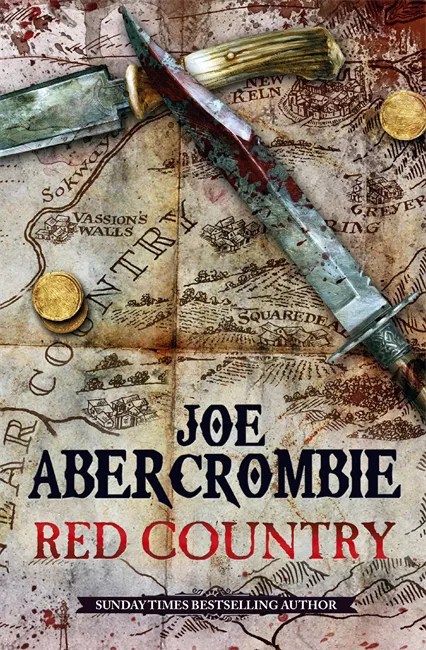
Red Country brings a frontier and Western influence to the First Law world. A search for abducted children becomes the starting point for a story about violence, identity and the difficulty of escaping the past.
This is an especially good book to approach without researching its cast. Earlier knowledge adds resonance, but advance explanations can spoil discoveries.
Explore the frontier: Find Red Country on Amazon.
When Should You Read Sharp Ends?

Read Sharp Ends after Red Country and before A Little Hatred. That is its publication-order position and a convenient place to pause before starting the next trilogy.
The collection contains stories set at different points in the world’s history. Some revisit familiar people; others expand the setting through different perspectives, including the recurring pairing of Shevedieh and Javre.
It is optional for following the novels’ main storyline. If your priority is to keep moving through the larger narrative, you can return to it later. What I would avoid on a first read is breaking it apart to slot every story into an exact timeline: that creates interruptions and can undercut the way the novels introduce their characters.
Add the short stories: Find Sharp Ends on Amazon.
The Age of Madness Trilogy in Order
The Age of Madness takes place later in the same world, where industrial development intensifies disputes over labor, wealth and political authority. It introduces a new central generation while carrying forward the consequences of the earlier books.
7. A Little Hatred

The trilogy opens amid tensions between established privilege and a changing economy. Factories and investment create opportunities for some people while making life increasingly punishing for others.
Start here only if you deliberately want to enter through the later trilogy. It introduces its own principal cast, but reading the earlier novels first provides substantially more context and preserves their surprises.
Begin the Age of Madness: Find A Little Hatred on Amazon.
8. The Trouble with Peace

The second installment develops the political conflicts and personal ambitions established in A Little Hatred. Relationships become harder to separate from strategy as characters try to protect their positions or improve them.
Read it immediately after the trilogy’s opener. This is a continuing narrative rather than an independent adventure.
Continue the Age of Madness: Find The Trouble with Peace on Amazon.
9. The Wisdom of Crowds

The trilogy concludes with upheaval and struggles over the shape of the new order. Its place at the end of the sequence makes it particularly vulnerable to spoilers in character guides and online discussions.
Save it until after The Trouble with Peace. The sequence matters both for the plot and for understanding how individual decisions accumulate into wider consequences.
Finish the Age of Madness: Find The Wisdom of Crowds on Amazon.
Where Does The Great Change (and Other Lies) Fit?

The Great Change (and Other Lies) is supplementary short fiction associated with the Age of Madness. Save it until after The Wisdom of Crowds. It is an extra for readers who want more of that era, rather than a required step between the novels.
Keep it separate from the nine-novel count. Likewise, Sharp Ends is a story collection, not a tenth main-sequence novel.
For additional short fiction: Check Amazon for The Great Change (and Other Lies). Availability and formats may vary.
Publication Order vs. Chronological Order
For the nine novels, the recommended publication sequence also follows the broad forward movement of the world’s history. Most confusion comes from short stories that take place earlier or between the novels.
Choose publication order for your first read. It preserves introductions and revelations while allowing the setting to grow naturally. An exact story-by-story chronology is better treated as a rereading project.
Can You Skip the Standalone Novels?
You can move from the original trilogy to A Little Hatred, but I recommend reading the three standalone novels first. They show changes in leadership, relationships and the balance of power that help explain the world the later trilogy inherits.
If you are deciding where to save time, the short-fiction collections are the easier material to postpone. The standalone novels contribute much more to the larger reading experience.
Is The Devils Part of The First Law?
No. The Devils belongs to a separate fantasy series. You do not need any First Law background to read it, and it does not occupy a position in this reading order.
If that is the book that introduced you to Abercrombie, our The Devils review offers a separate discussion. To explore the First Law universe afterward, begin with The Blade Itself.
Try the separate series: Find The Devils on Amazon.
Frequently Asked Questions
How many First Law books are there?
The main sequence covered here contains nine novels: the original trilogy, three standalone novels and the Age of Madness trilogy. Sharp Ends and The Great Change (and Other Lies) add supplementary short fiction.
Is the original First Law trilogy finished?
Yes. The original trilogy concludes with Last Argument of Kings. The later standalone novels and the completed Age of Madness trilogy continue the history of the same world.
Can you start with Best Served Cold?
Yes, its central revenge story can work as an entry point. However, starting with The Blade Itself gives you more context and helps you avoid learning about earlier developments out of order.
Do you need to read Sharp Ends before A Little Hatred?
No. Sharp Ends adds background and side stories, but it is optional for following the main novels. Its publication-order position is between Red Country and A Little Hatred.
What should you read after Last Argument of Kings?
Read Best Served Cold, followed by The Heroes and Red Country. Then read Sharp Ends if you want the short stories before beginning the Age of Madness with A Little Hatred.
Follow us on Instagram and Facebook


Discover more from Books of Brilliance
Subscribe to get the latest posts sent to your email.
