Updated: October 8, 2026
Anne Carson has won the 2026 Nobel Prize in Literature, bringing one of contemporary literature’s most unconventional writers to a much wider audience. The Canadian poet, essayist and translator was announced as this year’s laureate on October 8.
The Swedish Academy recognized Carson “for her bold and inventive oeuvre that, in playful dialogue with the classical tradition, has created new forms for contemporary literature,” according to Reuters’ report on the announcement.
For readers discovering her through the award, Carson offers something unusual: books that move between poetry, storytelling, criticism and translation without staying within the boundaries of any one form.
Who Is Anne Carson?
Carson is a Canadian writer and classical scholar whose work draws extensively on ancient Greek literature. She has taught classics at universities in North America, and her books bring scholarly inquiry into contact with love, grief, identity and the complications of ordinary life.
As AP’s coverage explains, her writing crosses the boundaries of poetry and prose. Her best-known works include the verse novel Autobiography of Red and Eros the Bittersweet, a study of desire in ancient Greek literature.
That range helps explain why a single label cannot fully describe her. Calling Carson a poet is accurate, but it does not capture everything readers encounter in her books.
Why Did Anne Carson Win the Nobel Prize?
The Academy’s citation emphasizes two qualities: invention and an ongoing conversation with classical literature.
A useful way to understand that combination is to look at Autobiography of Red. Carson takes material from Greek mythology and reshapes it into a contemporary story of love, vulnerability and artistic identity. The ancient story becomes a way of approaching experiences that remain recognizable.
Her work also invites readers to reconsider what a book can contain. A narrative can unfold through verse. An essay can carry the emotional pressure of a poem. A work about mourning can incorporate photographs, letters and fragments.
My view is that this is the most compelling aspect of Carson’s recognition: it encourages readers to explore writing whose form is part of its meaning. Her books offer more than familiar stories in unusual packaging. They ask how a different arrangement of language might change what we notice or feel.
Anne Carson Books to Read After Her Nobel Win
Readers do not need to approach Carson’s bibliography chronologically. Choosing a book by subject or form is a more practical starting point.
Autobiography of Red

Autobiography of Red is my recommended first stop for readers who usually gravitate toward fiction.
The book follows Geryon, a winged red boy whose relationship with Herakles becomes central to his coming-of-age story. Penguin Random House describes the novel as a contemporary reworking of an ancient Greek myth, combining narrative with poetry.
Its premise makes it especially relevant to readers interested in mythology and unconventional storytelling. Starting here gives newcomers a character and a narrative to follow while introducing Carson’s approach to literary form.
Eros the Bittersweet

Readers who enjoy essays, philosophy or literary criticism may prefer Eros the Bittersweet.
Published in 1986, the book examines the contradictions of desire through ancient Greek literature and philosophy. Princeton University Press’s description on JSTOR presents it as an exploration of romantic love’s intertwined pleasure and pain.
Choose this if the ideas behind a book interest you as much as its story. It offers a route into Carson through close attention to language and the questions literature raises.
The Beauty of the Husband

The Beauty of the Husband: A Fictional Essay in 29 Tangos centers on a marriage and engages with John Keats’s idea that beauty is truth, as its publisher’s description explains.
The subtitle provides a useful introduction to Carson’s methods: fiction, essay and a sequence of “tangos” occupy the same work.
For readers drawn to relationship stories, this is another possible entry point. Its subject offers an emotional focus while its structure introduces the freedom with which Carson approaches genre.
Nox
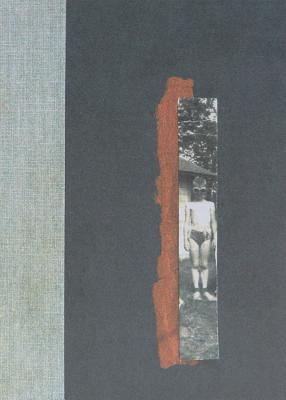
Nox approaches grief through the physical form of a book.
New Directions describes it as a reproduction of a handmade work Carson created after her brother’s death. It incorporates letters, family photographs, collages and sketches, alongside her engagement with Catullus’s poem mourning his own brother.
The accordion-fold presentation matters to the reading experience. Readers interested in memoir, mourning or the relationship between words and images may find this the most intriguing starting point.
Wrong Norma
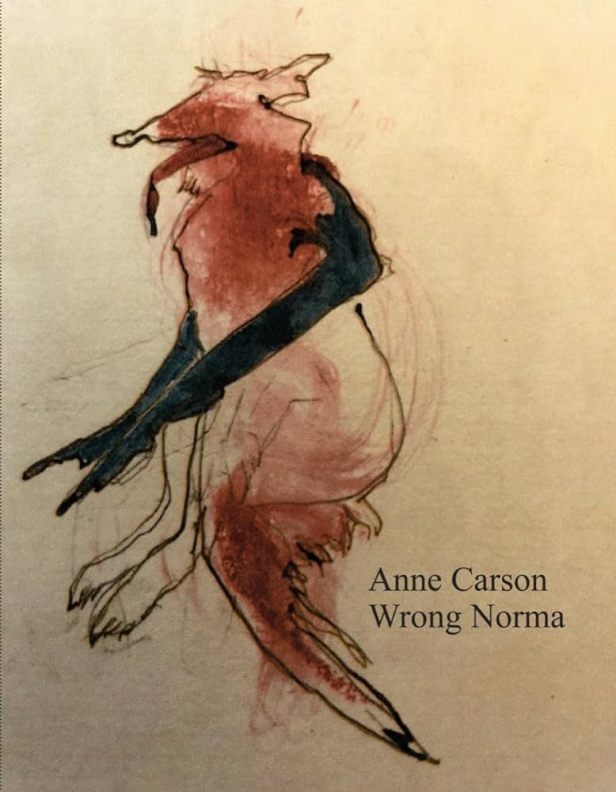
For a more recent introduction, consider Wrong Norma, published in 2024.
According to New Directions, it contains 25 poetic prose pieces and images created by Carson. Its subjects range widely rather than forming one continuous narrative.
This is an option for readers who prefer exploring a writer through individual pieces. It also shows that Carson’s experimentation extends well beyond her earlier, better-known books.
Where Should New Readers Start?
For most fiction readers, I would begin with Autobiography of Red. Readers who prefer ideas and criticism should consider Eros the Bittersweet, while those interested in grief and visual storytelling can turn to Nox.
There is no need to treat these books as a syllabus. Pick the subject that interests you, give the form time to become familiar, and follow your curiosity from there.
Carson’s Nobel win creates an opportunity to discover an author whose work challenges our expectations of poetry, fiction and the book itself. For Books of Brilliance readers who enjoy mythology and experimental storytelling, she is a particularly interesting writer to explore.
If you make a purchase through these links, I may earn a small commission at no extra cost to you.
Follow us on Instagram and Facebook


Discover more from Books of Brilliance
Subscribe to get the latest posts sent to your email.