By Ahaqir Ishaq | Books of Brilliance
Anne Carson won the 2026 Nobel Prize in Literature on October 8, bringing fresh attention to an author whose work moves between poetry, fiction, essays and translation. If the announcement has you wondering which Anne Carson book to read first, my recommendation is Autobiography of Red.
It gives readers a character and an emotional story to follow while introducing the unusual forms that make Carson worth exploring. But it is not the only way into her work. Readers who prefer nonfiction may want to begin with Eros the Bittersweet, while those drawn to writing about loss should consider Nox.
For the announcement itself, see our 2026 Nobel Prize in Literature coverage. This guide focuses on choosing your first Carson book and deciding what to read next.
Why Anne Carson’s Books Matter
In reporting on the Nobel announcement, Reuters explains that the Swedish Academy recognized Carson’s inventive work and its conversation with classical literature.
That connection is a useful way to approach her books. Ancient stories become material for exploring desire, identity and loss. Poetry, criticism and storytelling can appear together rather than occupying separate shelves.
For readers who enjoy mythology, the appeal is especially clear: familiar figures can acquire unfamiliar emotional lives. Carson asks us to pay attention to the person inside a story as much as the story’s inherited shape.
Which Anne Carson Book Should You Read First?
These are editorial recommendations based on each book’s subject and format.
| What you want to read | Start with | Why choose it |
|---|---|---|
| A story with a central character | Autobiography of Red | A novel in verse about identity, desire and artistic expression |
| A troubled relationship | The Beauty of the Husband | A marriage explored through narrative verse |
| Nonfiction about love and literature | Eros the Bittersweet | An essay examining desire through ancient Greek writing |
| Writing about grief and memory | Nox | A visual elegy combining words, photographs and fragments |
| Short, experimental pieces | Wrong Norma | A collection of poetic prose rather than a continuous narrative |
1. Autobiography of Red: The Best Starting Point for Fiction Readers

Autobiography of Red is my first recommendation for readers who usually reach for novels.
Its central character, Geryon, is a winged red monster growing up and trying to understand himself. His relationship with Herakles and his interest in photography give readers emotional and artistic threads to follow. Penguin Random House’s reading guide describes his difficult childhood, romantic attachment and developing creativity.
The book’s verse format may look unfamiliar, but having a central character offers a practical foothold. Start by following Geryon’s feelings and experiences. You can return to the classical references as your curiosity grows.
Choose this book if: You enjoy character-driven fiction, mythology or stories about outsiders.
2. The Beauty of the Husband: For Readers Interested in Love and Marriage

If you are more interested in relationships than mythological storytelling, consider The Beauty of the Husband.
The book explores a marriage that falls apart through 29 sections described as tangos. It also engages with Keats’s idea linking beauty and truth, as the publisher’s description explains.
That combination provides two ways into the book: the unfolding relationship and the questions surrounding attraction. What do we excuse because someone is beautiful? How does the story we tell ourselves about love affect what we accept?
I would place it early in a beginner’s reading plan because marriage and disillusionment provide recognizable subjects, even when the form challenges expectations.
Choose this book if: You like intimate fiction, relationship dramas and poetry with a narrative thread.
3. Eros the Bittersweet: For Essay and Nonfiction Readers

Eros the Bittersweet offers an entry through ideas.
First published in 1986, it examines romantic desire through ancient Greek literature and philosophy. Sappho’s description of love as bittersweet becomes a starting point for considering its mixture of pleasure, pain and longing. The Princeton University Press edition on JSTOR includes discussions of absence, boundaries and the relationship between desire and language.
This is the book I would recommend to someone who enjoys essays that develop an argument through close attention to words. Take it a section at a time and allow space to consider the examples.
Choose this book if: You prefer literary criticism, philosophy or nonfiction about human experience.
4. Nox: For Readers Drawn to Grief and Memory
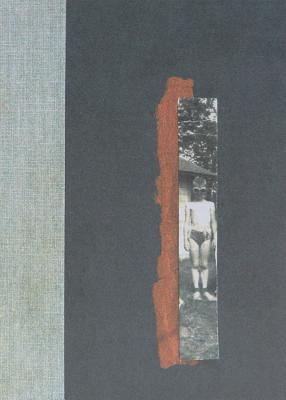
Nox is an elegy for Carson’s brother that also makes its physical form part of the reading experience.
New Directions describes the book as a reproduction of a handmade work incorporating family photographs, letters, collages and sketches. It connects Carson’s loss with her translation of Catullus’s poem mourning his own brother. The illustrated edition unfolds accordion-style from a box.
My recommendation is to approach it slowly and, if possible, examine the physical edition. The arrangement of images and fragments deserves attention alongside the words.
It is a different introduction from a novel or an essay: you enter through an act of remembrance.
Choose this book if: You are interested in elegies, family memory and the relationship between writing and visual art.
5. Wrong Norma: For Readers Who Enjoy Experimentation
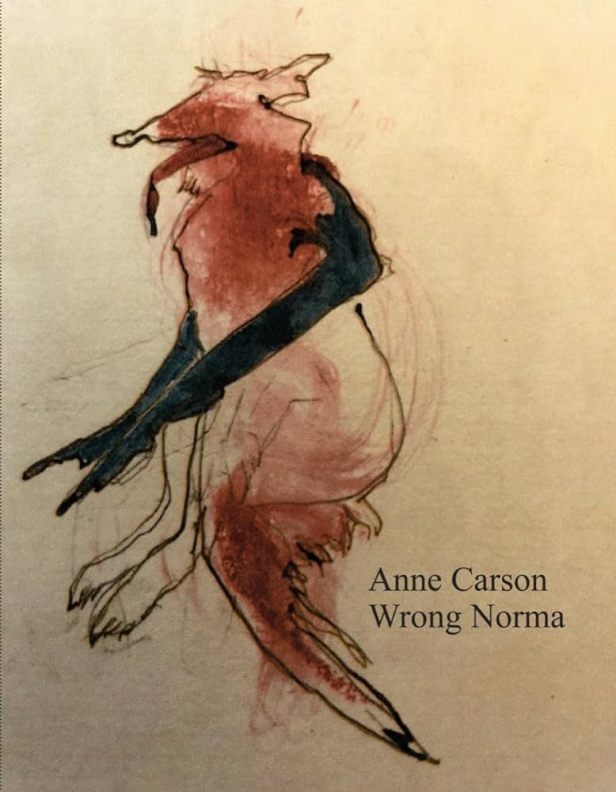
Wrong Norma is a good option if you want to encounter Carson through separate pieces rather than a continuous story.
Published in 2024, it contains 25 poetic prose pieces and images created by Carson. Its subjects vary widely, and Carson describes the pieces as unlinked in the publisher’s account of the collection.
That format makes it useful for readers who like to pause between pieces and consider changes in subject or approach. I would recommend it after a more sustained work if you want an initial sense of how Carson develops a longer narrative.
Choose this book if: You enjoy prose poetry, unusual collections and writing that changes direction.
A Suggested Anne Carson Reading Order
For a general introduction, I would recommend:
- Autobiography of Red
- The Beauty of the Husband
- Eros the Bittersweet
- Nox
- Wrong Norma
This is a suggested route, not a required sequence or a complete bibliography. Nonfiction readers can begin with Eros the Bittersweet. Readers interested in grief can go directly to Nox.
The most useful choice is the book whose subject already interests you. Carson’s Nobel win supplies a reason to explore her work; your reading preferences can supply the starting point.
If you make a purchase through these links, I may earn a small commission at no extra cost to you.
Follow us on Instagram and Facebook


Discover more from Books of Brilliance
Subscribe to get the latest posts sent to your email.