By Ahaqir Ishaq | October 1, 2026 | Category: News
The 2026 Baillie Gifford Prize shortlist has been announced, bringing together six nonfiction books about extraordinary lives, political upheaval and a family’s search for answers. This year’s finalists include Patrick Radden Keefe’s London Falling, Nicholas Boggs’ Baldwin: A Love Story and Andrea Wulf’s The Traveller.
The official shortlist announcement arrived on October 1. The winning author will receive £50,000. Baillie Gifford Prize
For readers looking to explore nonfiction, the selection offers several different starting points. Literary biography sits alongside ancient history, investigative journalism and reporting from Syria. Here is what each shortlisted book covers and which subjects might draw you to it.
The Complete 2026 Baillie Gifford Prize Shortlist
| Book | Author | Main subject |
|---|---|---|
| Baldwin: A Love Story | Nicholas Boggs | James Baldwin’s intimate and artistic relationships |
| Days of Love and Rage: A Story of Revolution | Anand Gopal | Ordinary people and revolution in Syria |
| London Falling | Patrick Radden Keefe | A teenager’s death and his parents’ investigation |
| Alexander: God, King, Man | Edmund Richardson | Alexander the Great’s life and rise to power |
| The Great Dictator: A Life of Barbara Cartland | Matthew Sweet | The prolific romance novelist’s life |
| The Traveller | Andrea Wulf | George Forster’s exploration and revolutionary ideas |
Baldwin: A Love Story by Nicholas Boggs
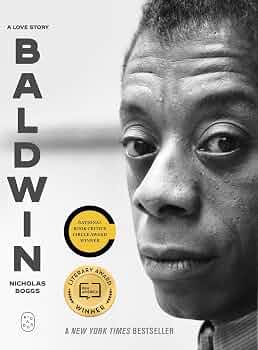
James Baldwin’s writing and public influence provide the backdrop to a biography that foregrounds the people closest to him. In Baldwin: A Love Story, Nicholas Boggs examines how intimate relationships and artistic partnerships shaped Baldwin’s life and work.
Drawing on archival discoveries, interviews and original research, Boggs explores connections with painter Beauford Delaney, lover and muse Lucien Happersberger, actor Engin Cezzar and artist Yoran Cazac. These relationships offer a way to understand both the private individual and the celebrated literary figure.
The book’s appeal lies in that focus. Readers familiar with Baldwin’s novels and essays can approach the people and emotional connections behind his creative life.
Who might choose it: Readers interested in Baldwin, literary biography, queer history and the relationship between personal experience and artistic work.
Days of Love and Rage by Anand Gopal

Anand Gopal’s Days of Love and Rage: A Story of Revolution focuses on Manbij, a city in northern Syria, during the revolution that began in 2011.
The book follows ordinary people trying to remake their society. Its subjects include friends divided by politics, a mother challenging male dominance and a worker pursuing equality. The judges describe reporting assembled from around 2,000 interviews, alongside social media posts and videos.
By concentrating on one city and individual lives, Gopal gives readers a specific way into a complex conflict. The questions raised concern how democracy takes shape, how solidarity fractures and how inequality affects political change.
Who might choose it: Readers interested in contemporary history, international reporting and the human experience of revolution.
London Falling by Patrick Radden Keefe

Patrick Radden Keefe returns to the shortlist with London Falling: A Mysterious Death in a Gilded City and a Family’s Search for Truth.
The book investigates the death of Zac Brettler, a London teenager who fell from a luxury apartment building overlooking the Thames in 2019. As his parents sought to understand what had happened, they discovered that their son had been posing as the son of a wealthy Russian oligarch.
Keefe follows their search for answers into London’s underworld. He previously won the Baillie Gifford Prize for Empire of Pain.
The family’s loss gives the investigation its personal focus, while Zac’s invented identity opens questions about wealth, deception and the people he encountered.
Who might choose it: Readers drawn to investigative journalism, true crime and stories connecting a family’s experience with larger systems of power.
Alexander: God, King, Man by Edmund Richardson

Edmund Richardson’s Alexander: God, King, Man follows Alexander the Great’s transformation from a young Macedonian ruler into a conqueror associated with divine status.
Built on more than a decade of research, the book traces his rise and military campaigns. Richardson is a professor of classics at Durham University, and the prize judges highlighted his research and atmospheric storytelling.
The subtitle provides a useful guide to the book’s attraction: Alexander’s humanity, political authority and extraordinary reputation belong to the same story. Readers interested in the making of historical legends have plenty to consider here.
Who might choose it: Readers interested in ancient history, classical biography, military campaigns and leadership.
The Great Dictator by Matthew Sweet

The title of Matthew Sweet’s The Great Dictator: A Life of Barbara Cartland refers to Cartland’s practice of dictating her books. The prize’s account credits the romance novelist with 723 books.
Using access to her archives and accounts from people who knew her, Sweet examines a life involving literary ambition, class, marriage, scandal and celebrity across a changing twentieth century.
For book lovers, this entry offers a chance to explore how an exceptionally prolific popular novelist built her career and public persona. Those publishing questions can appeal even to readers unfamiliar with Cartland’s romances.
Who might choose it: Readers interested in literary lives, romance publishing, British social history and celebrity.
The Traveller by Andrea Wulf

Andrea Wulf’s The Traveller: The Revolutionary Life of George Forster and his Search for Humanity follows an eighteenth-century explorer whose travels helped shape his ideas about equality.
Forster joined Captain Cook’s second voyage at seventeen. His encounters with different peoples and cultures contributed to his opposition to racism, slavery and empire. Wulf follows him from exploration into European intellectual circles and the French Revolution, including his involvement in the short-lived Republic of Mainz and exile in Paris.
The connection between experience and belief is the draw: travel becomes part of a life devoted to questioning the assumptions of his era.
Who might choose it: Readers interested in exploration, natural history, Enlightenment thought and revolutionary Europe.
When Will the 2026 Winner Be Announced?
The 2026 prize calendar lists November 4, 2026, as the date of the winner announcement and prize ceremony. As of October 1, no winner has been announced.
The judging panel is chaired by Kirsty Lang, joined by Bea Carvalho, Tiffany Jenkins, Sam Leith, Ravi Mattu and Elif Shafak
Which Book Should You Start With?
Choose by subject rather than trying to predict the winner. London Falling offers an investigation anchored in a family’s search for answers. Baldwin and The Great Dictator explore writers’ lives from different perspectives. Alexander takes readers into antiquity, while The Traveller connects exploration with political ideas. Days of Love and Rage follows people attempting to change their society.
Which of these six nonfiction books would you add to your reading list first?
Follow us on Instagram and Facebook
Posts


Discover more from Books of Brilliance
Subscribe to get the latest posts sent to your email.