
Historical fiction has a way of doing something that few other genres can pull off, it makes the past feel alive.
It’s one thing to read about history in a textbook. Dates, names, events, they’re all important, but they can feel distant. Historical fiction changes that. It puts you in the middle of it all. You feel the tension, the uncertainty, the emotion. You see how large-scale events shape individual lives.
And that’s what makes the genre so powerful.
With so many historical fiction novels out there, narrowing it down to just three is not easy. There are countless classics and modern masterpieces that could have made this list. But instead of trying to be exhaustive, this list focuses on impact.
These are the kinds of books that stay with you. The ones that don’t just tell a story, but change how you think about history and people.
If you’re looking for a place to start with historical fiction, these three novels are as strong a foundation as you can get.
Three Historical Fiction Books That You Must Read
War and Peace by Leo Tolstoy

When people talk about the greatest novels ever written, War and Peace almost always enters the conversation.
And for good reason.
Often described as Leo Tolstoy’s magnum opus, this novel is set during the Napoleonic Wars and follows the lives of several Russian aristocratic families as they navigate a world in turmoil. At its core, it’s about how history affects individuals and how individuals, in turn, play a role in shaping history.
But calling War and Peace just a historical novel doesn’t quite do it justice.
It’s part family drama, part philosophical exploration, and part war narrative. Tolstoy dives deep into questions about free will, fate, leadership, and the nature of power. Through characters like Pierre Bezukhov, Prince Andrei, and Natasha Rostova, readers get a wide range of perspectives on life, love, and purpose.
One of the most impressive aspects of the novel is its scope. Tolstoy moves seamlessly between intimate, personal moments and large-scale battle scenes. One chapter might focus on a quiet conversation between characters, while the next places you directly on the battlefield during the French invasion of Russia.
Despite its length and yes, it’s a long book, War and Peace rewards patience. The deeper you go, the more it gives back.
It’s also worth noting that Tolstoy doesn’t just recount historical events. He challenges traditional ideas about history itself. Instead of focusing solely on great leaders like Napoleon, he emphasizes the role of ordinary people and the countless small decisions that shape outcomes.
That perspective alone makes this novel stand out.
If you’re willing to commit to it, War and Peace isn’t just a book you read, it’s one you experience.
Gone with the Wind by Margaret Mitchell
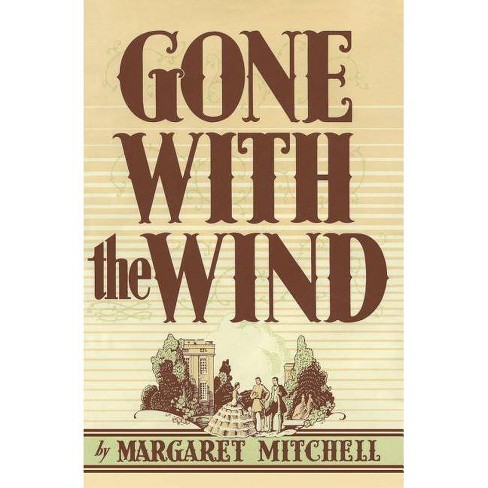
Few historical novels have had the cultural impact of Gone with the Wind.
Set during and after the American Civil War, the story follows Scarlett O’Hara, a strong-willed and often controversial protagonist, as she navigates love, loss, and survival in a rapidly changing world. Through her journey, readers witness the collapse of the Old South and the difficult transition into a new social and economic reality.
Scarlett is not your typical heroine. and that’s part of what makes the novel so compelling. She’s flawed, determined, selfish at times, but undeniably resilient. Her relationship with Rhett Butler adds another layer to the story, creating one of the most memorable dynamics in classic literature.
Beyond the romance and drama, Gone with the Wind offers a detailed look at life during one of the most turbulent periods in American history. Margaret Mitchell explores how war reshapes society, from the destruction of plantations to the shifting roles of men and women.
However, it’s important to approach this novel with a critical lens.
While it remains a significant work of literature, Gone with the Wind has been widely discussed, and criticized, for its portrayal of the South, particularly in how it handles issues related to slavery and race. Many modern readers and scholars point out that the novel reflects a romanticized view of the Confederacy and does not fully confront the realities of slavery.
That doesn’t mean it should be ignored. If anything, it makes it more important to read thoughtfully.
Understanding the context in which the book was written, and the perspectives it represents, adds another layer to the reading experience. It becomes not just a story about the Civil War, but also a reflection of how history has been interpreted and retold over time.
At its best, Gone with the Wind is immersive and emotionally engaging. But it’s also a reminder that historical fiction doesn’t just show us the past, it shows us how the past has been remembered.
Beloved by Toni Morrison

If War and Peace is expansive and Gone with the Wind is sweeping, Beloved is deeply personal and incredibly powerful.
Toni Morrison’s Pulitzer Prize winning novel tells the story of Sethe, a formerly enslaved woman living in post-Civil War America. She is haunted, both figuratively and literally, by her past, particularly the trauma of her experiences under slavery and the choices she was forced to make.
From the very beginning, Beloved makes it clear that this is not going to be an easy read.
Morrison doesn’t shy away from the brutality of slavery or its lasting effects. Instead, she confronts it head-on, exploring how trauma lingers and how memory can both heal and hurt. The novel blends realism with elements of the supernatural, creating a story that feels both grounded and haunting.
The character of Beloved herself is one of the most intriguing aspects of the book. Her presence raises questions about identity, memory, and the past’s grip on the present. Is she a ghost? A manifestation of guilt? Something else entirely?
Morrison leaves room for interpretation and that ambiguity is part of what makes the novel so impactful.
What truly sets Beloved apart, though, is its emotional depth.
This is a story about motherhood, survival, and the struggle to reclaim a sense of self after unimaginable hardship. Morrison’s writing is lyrical and layered, often requiring careful attention, but it’s also incredibly rewarding.
Like the other books on this list, Beloved isn’t just about historical events, it’s about the human experience within those events.
It forces readers to confront uncomfortable truths while also highlighting resilience and the possibility of healing.
Why These Three Books Matter
You could easily create a list of 50 or even 100 historical fiction novels worth reading. So why these three?
Because each one approaches history in a different way.
- War and Peace shows the intersection of personal lives and massive historical events.
- Gone with the Wind explores societal change and how people adapt or fail to adapt to it.
- Beloved focuses on the emotional and psychological impact of history on individuals.
Together, they offer a well-rounded view of what historical fiction can do.
They don’t just tell you what happened. They make you feel it.
And that’s the real value of this genre.
Final Thoughts
Historical fiction is more than just storytelling, it’s a bridge between the past and the present.
The best novels in this genre remind us that history isn’t just made up of events. It’s made up of people. Their choices, their struggles, their victories, and their failures.
War and Peace, Gone with the Wind, and Beloved each capture that idea in their own way. They challenge readers, immerse them, and leave a lasting impression.
If you haven’t read these books yet, consider this your starting point.
And if you have, then you already know, this is just the beginning. Until next time, happy reading!
Follow us on Instagram and Facebook


Discover more from Books of Brilliance
Subscribe to get the latest posts sent to your email.

Not sure why Beloved makes so many lists. It was a horrible book. Badly written and too meta to make real sense. People just want to be thought of as intellectual so they pretend it was good and that they liked it. If they really did, I think they might need psychiatric assistance.
How can this list exclude Winds of War and War and Remembrance? Unquestionably 2 of the finest history novels ever written. Should be required reading for ALL high school students.
I agree. Obscure and confusing. Did not like it. It was not enjoyable. The other two were good, gone with the wind easy to read, she didn’t even write most of it…Tolstoy was a genius. Read anna karenina…now there’s a great novel.
War and Peace is a remarkable novel. Panoramic, frantic, I have read it twice. Gone With the Wind is also absolutely wonderful but perhaps not fashionable now.
I don’t know Beloved but would substitute Katherine, passionate and historically accurate story of the mistress of an English powerful Duke. By Anya Seton.
Morrison’s writing is as spectacular as James Joyce’s Ulysses, et.al; but I’ve had difficulty with both. That doesn’t make me crazy; it simply reflects my tastes. However, have you ever read any of Morrison’s other books such as Sula, Bluest Eye or Song of Solomon? I think some of her previous books might lead to your appreciation of her writing more than you seem to do right now. No one is blaming you for not liking that one book; I’ve taught Morrison’s books to my college students, yet I admitted unashamedly, that I could not actually read Beloved. When we tackled the end term project of choosing one Morrison book to dissect & explain; one of the students came up to me to say that SHE had chosen Beloved in order to help ME appreciate it. This happened decades ago. Yet, I still have NOT read Beloved although I have read everything pertaining to the true story of Margaret Garner, the slave woman who believed that by murdering her own child would rescue that child from the slavery she herself had known. There’s much more to Garner’s story, of course.
Certainly, these are greaz wirks. However, I bslieve Crime and Punishment should also make the list. It is one of the greatest, if not the greatest book ever written.
-Brian Felder
War and Peace without a doubt, but Gone with the Wind? Is that a joke? Regarding the Civil War why not Michael Shaara’s Killer Angels! And Beloved is not in the same league either, although I didn’t think it was as bad as the previous post. Certainly Crime and Punishment or The Brothers Karamazov, and what about les Français??
Germinal by Zola, Les Misérables by Victor Hugo, and The Red and the Black by Stendhal.
I adore GWTW. I have not read the other books mentioned. I am certainly aware of War and Peace. Somerset Maugham says it is the greatest novel ever written. I will not dispute this claim. Unfortunately I have no opinion on the Morrison novel. A fantastic and unusual read for me was Irwin Shaw’s The Young Lions. Wonderfully written,
literate AND entertaining. – DD
I have read two of the books on this list and I enjoyed Gone with the Wind the most. Beloved was too strange to me even though I have read it twice.
War and Peace is the next one on my list along with Anna Kareina.
I would recommend reading “Jubilee” by Margaret Walker immediately after reading “Gone With The Wind” for a different perspective on the same historical period.
So happy to find this website and be able to go forward with my reading
Gone wind the wind is one of the most racist piece trash that exist. Shame on you for promoting this garbage
Gone with the Wind romanticizes the ‘lost cause’ which was billed as glorious undertaking to preserve a way of life. That way of life depended on the enslavement of black people..nothing less. The book is an awful piece of propaganda.
“Whispers in the Cosmic Silence” and “The Gossips of Endless Love” should make the list I believe.
Afterlives by Abdulrazak Gurnah and Pachinko by Min Jin Lee.
The best historical fiction is the Napoleonic War nautical series by Patrick O’Brian. It is rightly recognised globally as a masterpiece.
The writer of this blog is just showing how young he is, how little he has yet read and how many books he has yet to read.
I didn’t like Beloved. It was confusing and it failed to move me as a result. I think everyone should read Monsieur Long and His Child by Philippe Claudel. A novella. Nobody could read it and be the same afterwards . You will emerge deeper, sadder, more compassionate and wise. Other books ? Well there are so many but here are a few suggestions: Giovanni’s Room by James Baldwin, Victory City by Salman Rushdie, The Idiot by Dostoevsky, David Copperfield by Dickens, Ten Minutes Thirty-Eight Seconds in this Strange World by Elif Shafak, The People of the Abyss by Jack London, Hunger by Knut Hansen, The Mayor of Casterbridge by Hardy, King Lear by Shakespeare, The First Circle by Solzhenitsyn, The Kite Runner by Khalid Hosseini, The Little Prince by Oscar Wilde, The Well of Loneliness by Radclyffe Hall.
Monsieur LINH and His Child, I mean!!
Can any of these be considered Historical Fiction?
I read Beloved many years ago, and I still think about some scenes from it now and then. It is an amazing book with a powerful message about how the after effects of horrific events continue to ripple through time and generations.