
Surviving the future is one thing. Holding on to your compassion, memories, and sense of self can be much harder.
The science-fiction books on this list put that struggle at the center of the story. Some follow people whose bodies or minds are changing. Others ask who gets recognized as a person in the first place. In several, the institutions claiming to protect humanity are remarkably willing to mistreat individuals.
Here, “staying human” means preserving dignity, connection, and the freedom to choose. It does not mean that a particular body, level of intelligence, or origin makes someone more deserving of care.
From the uneasy empathy of Do Androids Dream of Electric Sheep? to the quiet losses of The Memory Police, these seven books make personhood a question with consequences.
Spoiler note: These recommendations discuss premises and themes without revealing major endings.
Affiliate disclosure: As an Amazon Associate, I earn from qualifying purchases. This article contains affiliate links.
1. Do Androids Dream of Electric Sheep? by Philip K. Dick

The hardest part: Practicing the empathy your society claims to value.
Rick Deckard hunts unauthorized androids on an Earth damaged by war and ecological collapse. His job depends on distinguishing artificial people from humans, then killing those who fall on the wrong side of the distinction.
Dick makes that assignment increasingly uncomfortable. In a world where living animals are coveted possessions and artificial replacements are common, authenticity is both a moral concern and a status symbol.
The tension comes from the gap between valuing empathy and behaving compassionately. Being able to identify a feeling does not guarantee that someone will act on it. Nor does belonging to the recognized group settle every ethical question.
This is the sharpest starting point if you want a book that makes an apparently simple category, human or android, feel unstable.
Best for: Readers who enjoy moral ambiguity and unsettling ideas more than reassuring answers.
Affiliate text: Explore Philip K. Dick’s questions about empathy in Do Androids Dream of Electric Sheep? on Amazon.
2. Never Let Me Go by Kazuo Ishiguro

The hardest part: Holding on to your worth when your future has been decided for you.
Kathy looks back on her childhood at Hailsham, an isolated English school, and her complicated relationships with Ruth and Tommy. Memories of friendship, jealousy, and small misunderstandings gradually reveal a much more disturbing world.
Ishiguro’s restraint is what makes the novel fit this list so well. The characters’ ordinary emotional lives matter before the reader fully understands the system surrounding them.
My reading is that the novel’s most painful question concerns recognition: how can a society understand that people have rich inner lives and still organize itself around their exploitation?
Kathy’s memories preserve the particular details that such a system would flatten. A friendship can be frustrating, a recollection uncertain, and a person imperfect without making any of them disposable.
Best for: Readers who prefer intimate literary science fiction and emotional unease.
For a closer look at its emotional impact, read our Never Let Me Go review.
Affiliate text: Discover Ishiguro’s quietly devastating novel with Never Let Me Go on Amazon.
3. All Systems Red by Martha Wells

The hardest part: Choosing connection when others see you as equipment.
The opening novella in the Murderbot Diaries follows a self-aware SecUnit that has secretly disabled the mechanism controlling its behavior. It would prefer to watch entertainment and avoid awkward interactions, but a dangerous planetary mission makes isolation difficult.
Murderbot belongs here because it complicates the title’s premise: it does not need to become human to deserve autonomy or to care about others.
Its choices invite a more useful question. What does kindness mean when it comes from someone built and purchased to perform a function?
Wells balances that question with action and dry humor. Murderbot’s reluctance to socialize also gives the story a welcome distinction: caring about people does not require enjoying every moment spent around them.
Best for: Readers who want a short, funny science-fiction story with a serious concern for personhood.
Affiliate text: Meet Murderbot in All Systems Red by Martha Wells on Amazon.
4. Dawn by Octavia E. Butler

The hardest part: Deciding what survival is worth when consent is constrained.
Lilith Iyapo wakes aboard an alien spacecraft after a nuclear catastrophe. The Oankali have saved surviving humans, but their plans for humanity involve profound biological change.
Butler makes rescue an ethically difficult relationship. The beings offering help also control the conditions under which people can continue living.
Read through the theme of autonomy, Dawn asks how much freedom remains in a choice made under overwhelming pressure. Gratitude, fear, dependence, and resistance can exist at the same time.
It also complicates the desire to preserve humanity exactly as it was. The species being saved has already brought itself close to destruction. That history gives the aliens an argument, but it does not settle the question of who should control another person’s future.
Best for: Readers comfortable with disturbing questions about bodily autonomy, reproduction, and unequal power.
Affiliate text: Begin Butler’s challenging first-contact story with Dawn on Amazon.
5. Flowers for Algernon by Daniel Keyes

The hardest part: Protecting dignity when people measure worth through intelligence.
Charlie Gordon undergoes an experimental procedure intended to increase his intelligence, following earlier work involving a mouse named Algernon. His progress reports bring the reader close to his changing experience of the world.
This recommendation is for the expanded novel, rather than the earlier short story.
The important distinction is that Charlie’s humanity never depends on the procedure. What changes is his understanding of himself and the behavior of people around him.
The experiment offers an especially painful lens on a familiar habit: treating someone’s abilities as permission to underestimate, patronize, or use them. Reading Charlie as a complete person from the beginning makes that treatment harder to excuse.
Choose this book for science fiction in which an experimental breakthrough matters most because of its effect on one person’s emotional life.
Best for: Readers drawn to intimate, emotionally difficult stories about dignity and belonging.
Affiliate text: Read the full novel of Flowers for Algernon by Daniel Keyes on Amazon.
6. Ancillary Justice by Ann Leckie
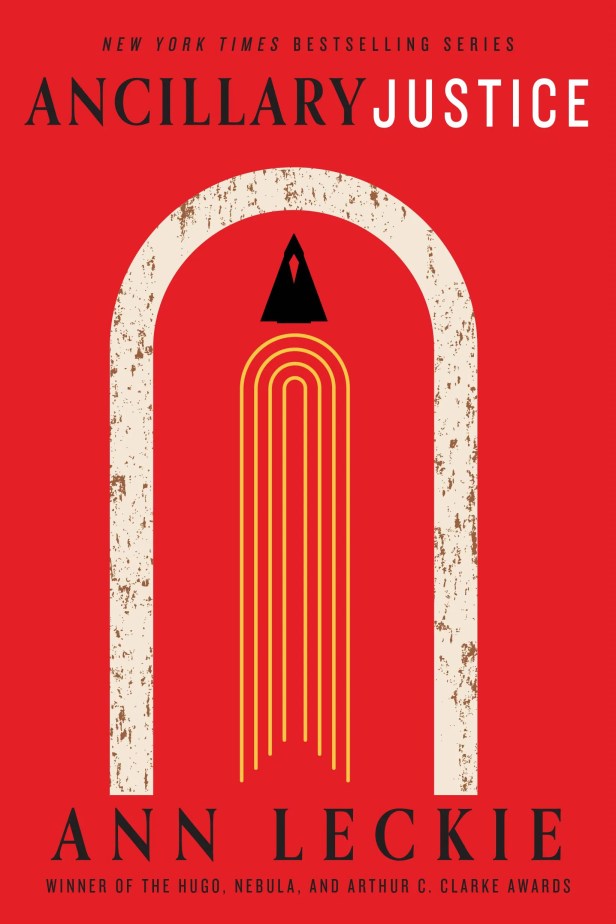
The hardest part: Finding an individual moral direction after serving an empire.
Breq was once part of a warship intelligence connected to thousands of human bodies. Now limited to a single body, she pursues a mission shaped by betrayal.
That premise makes individuality a practical problem. What happens to identity when a consciousness accustomed to existing in many places must live within one fragile perspective?
The imperial setting adds another layer. Bodies can become instruments of conquest, while official authority determines whose choices matter.
My reading of Breq’s predicament is that identity involves responsibility as well as continuity. Remembering what you were does not resolve what you should do next—or how you should treat people whose lives your former role helped control.
Best for: Readers who enjoy demanding space opera, unfamiliar social conventions, and political questions.
Affiliate text: Enter Ann Leckie’s Imperial Radch universe with Ancillary Justice on Amazon.
7. The Memory Police by Yoko Ogawa

Translated from Japanese by Stephen Snyder.
The hardest part: Preserving connection when the world keeps forgetting.
On an unnamed island, objects disappear and most people lose the ability to remember them. Those who retain their memories are threatened by the Memory Police. A novelist tries to protect her editor, who can still remember.
Ogawa approaches speculative fiction through an eerie, fable-like premise rather than a detailed technological explanation. The disappearances gradually narrow what people can recognize, discuss, and preserve.
Through this list’s lens, the novel asks how much of a life depends on shared references: the things another person remembers with you, the meanings attached to ordinary objects, and the stories that keep an absent world accessible.
Its intimate scale makes the losses accumulate. Protecting another person and continuing to write become ways to resist the shrinking boundaries of experience.
Best for: Readers who enjoy quiet dystopias, Japanese literature, and stories about memory.
Affiliate text: Discover Ogawa’s haunting novel in The Memory Police on Amazon.
Which Book Should You Read First?
Start with All Systems Red if you want momentum, humor, and a shorter commitment. Choose Never Let Me Go for an intimate emotional experience, or Do Androids Dream of Electric Sheep? for a more abrasive examination of empathy.
For questions about consent and survival, pick Dawn. For intelligence and dignity, choose Flowers for Algernon. Ancillary Justice offers the most demanding space-opera entry here, while The Memory Police suits readers who want an unsettling, dreamlike atmosphere.
Which matters most to your sense of self: your memories, your freedom to choose, or the people you care about?
Follow us on Instagram and Facebook


Discover more from Books of Brilliance
Subscribe to get the latest posts sent to your email.
