Patrick Radden Keefe writes about the secrets people keep and the power that allows those secrets to survive. His subjects include political violence, pharmaceutical fortunes, human smuggling and a family searching for answers after a teenager’s death. For readers who enjoy nonfiction with the momentum of a mystery, his bibliography offers several distinct starting points.
Patrick Radden Keefe’s six books in publication order are Chatter, The Snakehead, Say Nothing, Empire of Pain, Rogues and London Falling. They are standalone works, so you can begin with whichever subject interests you most. The publisher’s guide to Keefe’s books brings together all six titles.
My recommendation for most new readers is Say Nothing. Choose Empire of Pain if you are more interested in wealth and corporate accountability, or Rogues if you want to try shorter pieces before committing to a full-length investigation.
Patrick Radden Keefe Books in Publication Order
| Order | Book | Publication year | Main focus |
|---|---|---|---|
| 1 | Chatter: Dispatches from the Secret World of Global Eavesdropping | 2005 | Surveillance, intelligence and secrecy |
| 2 | The Snakehead: An Epic Tale of the Chinatown Underworld and the American Dream | 2009 | Human smuggling and immigration |
| 3 | Say Nothing: A True Story of Murder and Memory in Northern Ireland | 2018 UK / 2019 US | The Troubles, disappearance and memory |
| 4 | Empire of Pain: The Secret History of the Sackler Dynasty | 2021 | Pharmaceutical wealth and the opioid crisis |
| 5 | Rogues: True Stories of Grifters, Killers, Rebels and Crooks | 2022 | Collected investigative profiles |
| 6 | London Falling: A Mysterious Death in a Gilded City and a Family’s Search for Truth | 2026 | A teenager’s death and London’s hidden worlds |
These are original publication years, rather than dates for later paperback editions. Say Nothing appeared in a William Collins edition in November 2018, before its American publication in February 2019. This explains why reading lists sometimes assign it different years.
1. Chatter (2005)
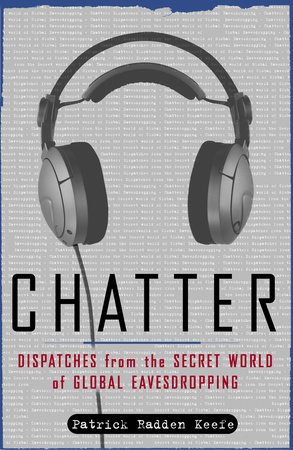
Keefe’s debut explores communications interception: how governments listen, what they hope to learn and whether gathering more information necessarily produces better intelligence.
The publisher’s description of Chatter identifies the Echelon surveillance network as its starting point. From there, Keefe examines the people and institutions behind global eavesdropping, connecting reporting with questions about privacy and national security.
This is the logical first stop for readers who want to follow his career chronologically. It is also the strongest subject match for anyone drawn to intelligence gathering and government secrecy.
Read it as an investigation rooted in its era, rather than a current guide to surveillance technology. Its place in this bibliography matters because secrecy was central to Keefe’s work long before his best-known books about crime and dynastic wealth.
Start here if: You prefer espionage, surveillance and institutional power to murder investigations.
2. The Snakehead (2009)

The Snakehead moves into New York’s Chinatown and the business of smuggling people into the United States. Its central figure is Cheng Chui Ping, known as Sister Ping, whose operation became the subject of a lengthy federal investigation.
As the publisher’s account of The Snakehead explains, Keefe follows both the smuggling network and the immigrants navigating an underground economy that could sustain them while also exploiting them.
That combination gives readers more than a portrait of a criminal enterprise. The book’s subject also raises questions about opportunity, desperation and who gets access to the American dream.
For a reader choosing between Keefe’s books, this is the clearest match for an interest in immigration and organized crime. It is also a useful next step after London Falling if you want another investigation connecting individual lives with a city’s concealed economies.
Start here if: You want crime reporting with immigration and New York history at its center.
3. Say Nothing (2018 UK; 2019 US)
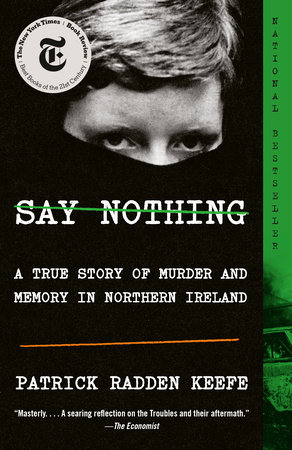
Say Nothing begins with the 1972 abduction of Jean McConville, a Belfast widow and mother of ten. Keefe uses her disappearance and murder to explore the Troubles in Northern Ireland and the consequences that persisted after the conflict.
The American publisher’s page for Say Nothing describes a narrative concerned with violence, silence and the damage left behind. The book won the National Book Critics Circle Award for nonfiction and the Orwell Prize for Political Writing.
I would put this first for readers who enjoy historical mysteries but want to move into nonfiction. Its central question gives you a reason to keep reading while the wider history provides context for the people involved.
The important distinction is that this is a reported account of real suffering. Approach it for its examination of memory and responsibility as well as its investigative structure.
Start here if: You want a disappearance investigation intertwined with political history.
4. Empire of Pain (2021)

by Patrick Radden Keefe
Empire of Pain examines three generations of the Sackler family, tracing pharmaceutical wealth, philanthropy and the history surrounding OxyContin and the opioid crisis.
The publisher’s description of Empire of Pain presents a family history that extends into advertising, medicine, reputation and institutional influence.
This is the starting point I would recommend to readers who want to understand how a fortune is built and defended. Its scope makes it especially suitable for anyone interested in corporate wrongdoing, family dynasties or the relationship between money and public respectability.
The question connecting it to Keefe’s crime reporting is accountability: what happens when the people under scrutiny have the resources to shape how others see them?
For readers who have already read Empire of Pain, choose your next book by the element that interested you most. Move to London Falling for another exploration of wealth and secrecy, or Say Nothing for a different setting shaped by contested responsibility.
Start here if: You want investigative nonfiction about corporate power and inherited wealth.
5. Rogues (2022)

Rogues collects twelve of Keefe’s articles from The New Yorker. It is a collection of separate reported stories, rather than one continuous investigation.
The publisher’s overview of Rogues highlights subjects including wine fraud, an arms merchant, a death-penalty attorney and Anthony Bourdain. That range makes it useful for readers who want to sample Keefe’s interests across several settings.
It is my recommendation for anyone who reads in shorter sessions. You can finish an individual piece before deciding whether to move straight into another, without keeping an entire book’s cast and chronology in mind.
The Bourdain profile also offers a natural entry for readers interested in the chef and writer. The collection’s variety is its main advantage: you can discover which aspects of Keefe’s reporting make you want to explore his longer books.
Start here if: You want shorter nonfiction, profiles and a broad introduction to his work.
6. London Falling (2026)

Keefe’s latest book, London Falling, was published in the United States on April 7, 2026, according to its Doubleday publication page.
It investigates the death of nineteen-year-old Zac Brettler and his parents’ search for answers. After his death, they discovered that he had been posing as the son of a wealthy Russian oligarch. The investigation connects his concealed life with the people and money behind London’s glamorous surface.
October 1, 2026 update: London Falling was named to the 2026 Baillie Gifford Prize shortlist. It is shortlisted, not a confirmed winner.
Choose this first if you want Keefe’s newest work or are especially interested in contemporary London. Its family-centered premise also makes it a different entry point from the wider historical sweep of Say Nothing or the multigenerational structure of Empire of Pain.
Start here if: You want a contemporary investigation connecting grief, identity and wealth.
Where Should You Start With Patrick Radden Keefe?
| Your main interest | Recommended first book |
|---|---|
| Political history and a disappearance investigation | Say Nothing |
| Corporate power and family fortunes | Empire of Pain |
| Shorter reported stories | Rogues |
| Contemporary London and a family’s search for truth | London Falling |
| Immigration and organized crime | The Snakehead |
| Surveillance and intelligence | Chatter |
For a general introduction, my suggested route is ** Say Nothing → Empire of Pain → Rogues **. After those, follow your interests into London Falling, The Snakehead or Chatter.
Publication order is useful for seeing how Keefe’s subjects developed. Reading by subject is more useful if you are deciding which book to buy or borrow next. There are no plot dependencies to worry about.
Frequently Asked Questions
Do Patrick Radden Keefe’s books need to be read in order?
No. His six books are standalone nonfiction works. Publication order is optional.
What is Patrick Radden Keefe’s newest book?
As of October 1, 2026, his newest published book is London Falling: A Mysterious Death in a Gilded City and a Family’s Search for Truth.
Is Rogues a novel?
No. Rogues is a collection of twelve reported nonfiction articles.
Is Say Nothing a 2018 or 2019 book?
Both dates appear because of regional publication differences. It was published in the UK in 2018 and in the United States in 2019.
If you make a purchase through these links, I may earn a small commission at no extra cost to you
Follow us on Instagram and Facebook
Posts


Discover more from Books of Brilliance
Subscribe to get the latest posts sent to your email.