Utah has added seven novels to its statewide public-school removal list, bringing the total to 44 prohibited titles. The additions include books by Sarah J. Maas, Ellen Hopkins, Jesse Andrews, Kerri Maniscalco, Jennifer L. Armentrout and V. E. Schwab.
The Salt Lake Tribune’s reporting, republished by KPCW, identifies all seven additions. The Utah State Board of Education’s list was updated on September 28, 2026.
These are statewide requirements to remove books from student access in Utah public schools. They are different from a complaint about a book at one school, or a district’s decision affecting only its own schools. The requirement concerns public-school access; it does not prohibit the books from being published or sold.
Which Seven Books Were Added?
| Book | Author |
|---|---|
| House of Earth and Blood | Sarah J. Maas |
| Perfect | Ellen Hopkins |
| Identical | Ellen Hopkins |
| Me and Earl and the Dying Girl | Jesse Andrews |
| Kingdom of the Cursed | Kerri Maniscalco |
| Storm and Fury | Jennifer L. Armentrout |
| The Invisible Life of Addie LaRue | V. E. Schwab |
The books encompass contemporary young-adult fiction, novels in verse and fantasy with prominent romantic elements. Here is what each book is about, separate from the state’s content classification.
House of Earth and Blood by Sarah J. Maas

The opening novel in Maas’s Crescent City series follows Bryce Quinlan, who is half human and half Fae, as she investigates killings alongside fallen angel Hunt Athalar. Bloomsbury’s description of House of Earth and Blood presents a contemporary fantasy combining a murder investigation, grief and romance. It is a different series from Maas’s A Court of Thorns and Roses.
Perfect by Ellen Hopkins
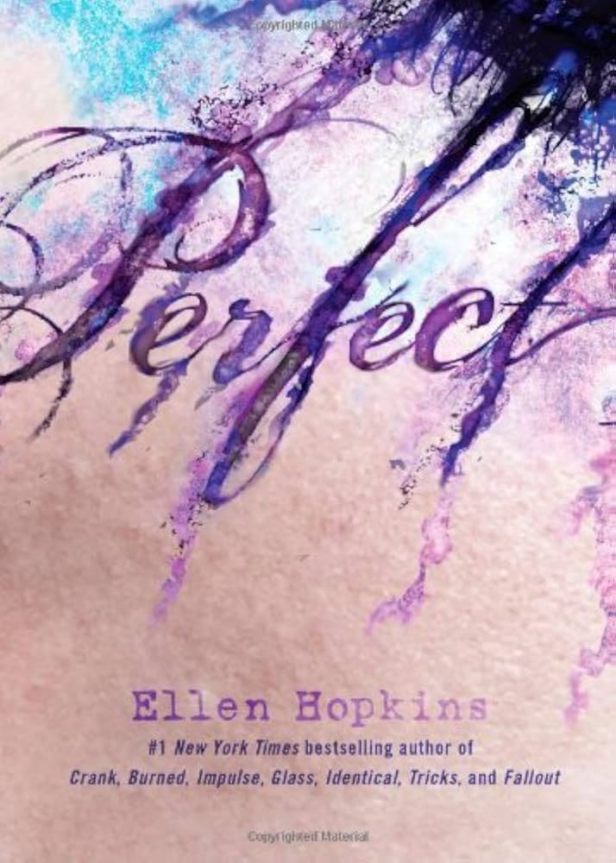
Hopkins’s novel in verse follows four teenagers confronting pressures involving appearance, achievement, identity and other people’s expectations. Simon & Schuster identifies Perfect as a companion to Impulse. Its central concern is the damage caused by trying to meet an ideal of perfection.
Identical by Ellen Hopkins

Another Hopkins novel in verse, Identical centers on sixteen-year-old twins Kaeleigh and Raeanne and the trauma concealed behind their family’s respectable public image. The publisher’s synopsis of Identical describes sexual abuse, substance use, self-harm and disordered eating as part of the sisters’ story.
Me and Earl and the Dying Girl by Jesse Andrews

This contemporary young-adult novel follows Greg, a teenager who makes amateur films with his friend Earl, and Rachel, a classmate with leukemia. Penguin Random House’s description of Me and Earl and the Dying Girl emphasizes the intersection of awkward adolescence, friendship and mortality. The novel also inspired a film adaptation.
Kingdom of the Cursed by Kerri Maniscalco

The sequel to Kingdom of the Wicked follows Emilia into the Seven Circles, where she navigates dangerous alliances while seeking answers about her sister’s murder. Hachette’s synopsis of Kingdom of the Cursed describes a fantasy romance involving demonic courts, revenge and conflicting clues.
Storm and Fury by Jennifer L. Armentrout

The first Harbinger novel follows Trinity Marrow, an eighteen-year-old losing her sight who can communicate with ghosts and spirits. Harlequin’s description of Storm and Fury introduces the Wardens, supernatural protectors guarding her, and Zayne, with whom she must work as a wider threat emerges.
The Invisible Life of Addie LaRue by V. E. Schwab

Schwab’s standalone fantasy begins in France in 1714, when a young woman makes a bargain for immortality but becomes someone everyone forgets. Macmillan’s synopsis of The Invisible Life of Addie LaRue follows her across centuries until she encounters someone who remembers her. The premise explores memory, freedom and the desire to leave a lasting trace.
How Utah’s Statewide Removal Process Works
Utah’s statewide mechanism was established through the 2024 sensitive-materials legislation, House Bill 29. The trigger depends on qualifying local determinations about a particular title.
The Utah State Board of Education’s sensitive-materials reporting page explains that statewide removal applies when a book has been determined to contain “objective sensitive material” and removed on that basis by either:
- At least three school districts, or
- At least two school districts and five charter schools.
Three complaints, or removals at three individual schools within one district, are not equivalent to three qualifying district determinations. The September 28 update date appears on this official reporting page.
The category “objective sensitive material” is a defined legal classification under Utah’s sensitive-materials framework. It should be attributed to that framework rather than presented as a general literary description of the novels.
Under state board Rule R277-628, local education agencies report challenges, final determinations and their rationale to the state superintendent. Once the statewide threshold is met, the superintendent must notify the designated local representatives and the board within ten school days.
The rule also permits a state board member, within thirty days of notification, to request that the material be placed on a full-board meeting agenda for a vote to overturn the statewide requirement. A new removal therefore does not necessarily begin with a separate state board vote to ban that title.
A Challenge Is Different From a Statewide Ban
These stages describe different actions:
| Stage | What it means |
|---|---|
| Local challenge | Someone asks the relevant school system to review a book. The complaint is not itself a final content determination. |
| Removal during review | Student access may be suspended while the local review proceeds. This is distinct from a final determination. |
| Final local removal | The relevant district or charter school determines that a book must be removed under the applicable standards. |
| Statewide removal | Qualifying objective-sensitive-material determinations meet the statutory threshold, requiring removal from student access across Utah public schools. |
The statutory framework enacted in 2024 distinguishes initial review, local determinations and statewide action. It also distinguishes objective and subjective sensitive-material standards; the statewide trigger specifically concerns the objective classification.
For readers following these seven novels, the practical change is their addition to the statewide public-school removal list. Reporting a challenge elsewhere requires a separate check of its outcome and scope: a complaint, temporary restriction and final statewide removal are different developments.
Follow us on Instagram and Facebook


Discover more from Books of Brilliance
Subscribe to get the latest posts sent to your email.